
When I first dealt with a urinary tract infection last year, I made every mistake possible. I kept drinking my morning coffee, thinking one cup wouldn’t hurt. I ate spicy takeout because I was too uncomfortable to cook. And honestly? I made everything worse. That burning sensation when I used the bathroom became unbearable, and my symptoms dragged on way longer than they should have.
My grandmother noticed I was struggling and pulled out her old health journal (the one where she’s been recording remedies and observations for decades). She sat me down with chamomile tea and explained exactly which foods to avoid with UTI and why they were making my bladder angrier. Within two days of following her advice, I felt noticeably better. The constant urgency lessened, and the burning reduced significantly.
Now I’m sharing what I learned because nobody should suffer longer than necessary. This guide covers foods to avoid with UTI, what you can safely eat instead, and the timing for reintroducing your favorite drinks once you’re healed.
Quick Answer: What Foods Should You Avoid with a UTI?
Avoid bladder irritants while you have a UTI: caffeine (coffee, strong tea), sodas and sugary drinks, very spicy foods, and acidic foods like citrus juices (orange, grapefruit). Stay hydrated with plain water, follow antibiotics exactly, and see a clinician if fever, flank pain, or worsening symptoms appear.
Why Certain Foods Make UTI Symptoms Worse
Your bladder lining is already inflamed and sensitive when you have a urinary tract infection. Think of it like a sunburn on the inside. Anything harsh will sting. Certain foods to avoid during UTI increase irritation in three main ways:
Bladder Irritation
Caffeine, acidic foods, and certain preservatives directly irritate the inflamed tissue, making that burning sensation more intense. When I drank coffee during my UTI, the urgency increased within 30 minutes every single time.
Diuretic Effects
Coffee and caffeinated tea make you urinate more frequently. This sounds helpful but actually concentrates irritants in your bladder longer between bathroom trips. My grandmother explained this perfectly: “More trips doesn’t mean better cleaning. It means more irritation.”
Bacterial Fuel
High sugar content in sodas and sweetened drinks can encourage bacterial growth, potentially prolonging the infection even while you’re on antibiotics. This was news to me, but it makes sense. Bacteria thrive on sugar.
My grandmother explained this using her garden analogy: “You wouldn’t pour salt water on a wounded plant. Your bladder needs gentle care, not harsh substances.”
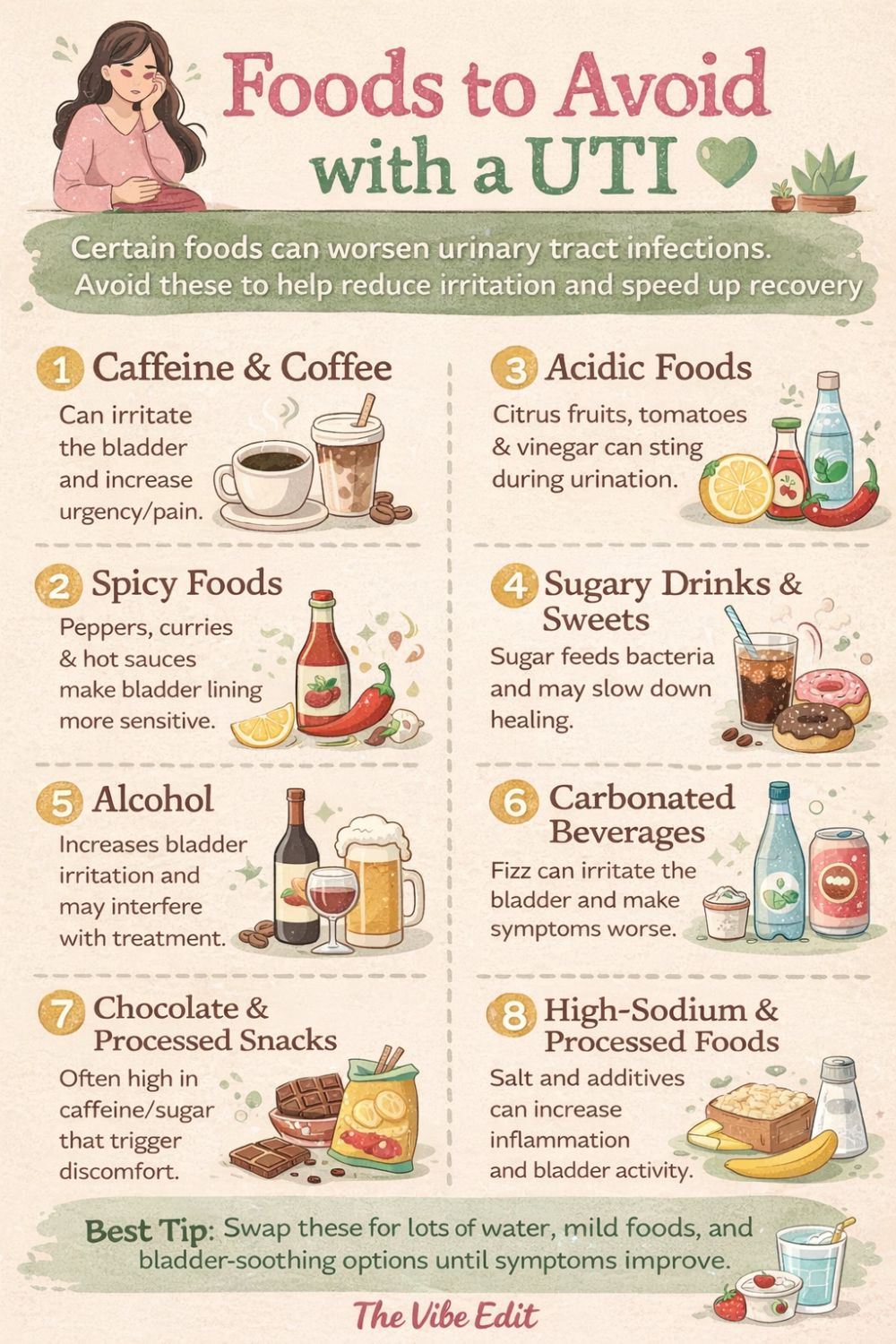
Top 12 Foods and Drinks to Avoid with UTI
Here’s the practical list I wish someone had given me on day one. I’ve organized it by priority based on what caused me the most trouble and what my grandmother’s research showed:
High-Priority Items to Cut Immediately
1. Coffee and Strong Tea
These were my biggest mistake. Caffeine and UTI effects are well-documented. Even one cup increased my urgency dramatically. Caffeine irritates the bladder severely and increases the need to urinate constantly.
What to drink instead: Warm water with cucumber slices, mild chamomile tea, or peppermint tea (caffeine-free)
When to reintroduce: Wait until 48 hours after all symptoms completely disappear
2. Sodas (Regular and Diet)
Both types are problematic. Regular soda contains high sugar that feeds bacteria. Diet versions have artificial sweeteners that irritate the bladder. Plus, carbonation and often caffeine make the combination terrible for UTI symptoms.
What to drink instead: Plain sparkling water (no sweeteners), infused water with melon or cucumber
Why it matters: I tested this by having one diet soda on day three of my UTI, and the burning came back within two hours
3. Sugary Drinks and Energy Drinks
The high sugar content potentially feeds bacteria while irritating your already sensitive bladder lining. Energy drinks add massive amounts of caffeine on top, creating a double problem.
What to drink instead: Coconut water (unsweetened), plain water with a splash of cucumber juice
Personal experience: Energy drinks were the worst offender for me. Never again during a UTI
4. Citrus Juices
Orange, grapefruit, and lemon juices are highly acidic. Even though my grandmother swears by lemon water for other things, she told me to skip all acidic foods during active urinary tract infection symptoms.
What to drink instead: Diluted pear juice, apple juice (not from concentrate), or plain water
Important note: The acid stings inflamed tissue. I learned this when orange juice made the burning unbearable
Moderate-Priority Foods to Avoid During UTI
5. Very Spicy Foods
That takeout I mentioned? Big mistake. Spicy foods and bladder irritation go hand in hand. Even mild pepper made things worse for me during my UTI.
What to eat instead: Mild, bland meals like rice with steamed vegetables, plain dal, simple khichdi
Why avoid: Spicy foods increase burning sensation noticeably within hours of eating
6. Tomato-Based Products
Pasta sauce, ketchup, salsa, and pizza sauce all contain high acidity that can sting your inflamed bladder. This includes both raw tomatoes and cooked products.
What to eat instead: Cream-based sauces (light coconut cream or cashew cream), plain olive oil with herbs
My experience: I love pasta, but tomato sauce during my UTI was a terrible idea
7. Artificial Sweeteners
Found in diet sodas, sugar-free products, and some packaged foods. Some people tolerate these fine, but they made my urgency worse and triggered more frequent bathroom trips.
What to use instead: Small amounts of natural fruit if you need sweetness, or jaggery in very limited quantities
Research note: My grandmother’s journal mentioned that aspartame and saccharin are common bladder irritants
8. Chocolate and Cocoa Products
Contains both caffeine and compounds (theobromine) that can irritate the bladder in sensitive individuals. This includes chocolate milk, cocoa powder, and chocolate desserts.
What to eat instead: Carob-based treats if you need something sweet (though honestly, just wait until you’re better)
Personal note: This was hard for me, but avoiding chocolate for one week was worth the relief
Lower-Priority but Still Important
9. Vinegar and Pickled Foods
The acidity can irritate, though less intensely than citrus for most people. This includes salad dressings with vinegar, pickles, and fermented vegetables with vinegar.
What to eat instead: Fresh vegetables with mild seasonings, lemon-free seasoning blends
Important: Apple cider vinegar is popular for health, but avoid it during active UTI
10. Processed Foods with Preservatives
Some preservatives can irritate the bladder, plus they’re often high in sodium which can increase inflammation. This includes packaged snacks, instant noodles, and canned foods.
What to eat instead: Fresh, home-cooked meals with minimal processing
Why it matters: Natural, simple foods are easier on your healing bladder
11. Raw Onions and Garlic
While cooked versions are usually fine, raw forms can irritate some people during active infection. I noticed this with raw onion in salads.
What to eat instead: Well-cooked onions and garlic for flavor without irritation
Tip: Sautéing or roasting reduces the irritating compounds
12. Strong Condiments
Hot sauce, mustard, horseradish, and similar strong condiments can increase bladder sensitivity and burning.
What to use instead: Mild herbs like coriander, cumin (in small amounts), and fresh curry leaves
Personal learning: Even “medium” spice level was too much during my UTI
What You Can Safely Eat and Drink During a UTI
My grandmother’s journal emphasized what TO eat just as much as what not to eat with a UTI. Here’s what helped me feel better and supported healing:
Best Drinks for Hydration
Plain Water
This is your primary friend. I aimed for eight to ten glasses daily, which helped flush bacteria naturally. Keep a water bottle visible as a constant reminder.
How much: At least 2-3 liters daily, more if you can manage it
Why it works: Frequent urination (from water, not caffeine) helps wash bacteria from your urinary tract
My routine: I set hourly reminders on my phone to drink water
Herbal Teas
Chamomile and peppermint became my comfort drinks without any caffeine. They’re soothing, warm, and don’t irritate the bladder at all.
Best options: Chamomile, peppermint, fennel, and licorice root tea
Avoid: Green tea (contains caffeine), black tea (too much caffeine)
Personal favorite: Chamomile with a tiny bit of honey after the worst symptoms passed
Diluted Cranberry Juice
Real cranberry contains compounds (proanthocyanidins) that may prevent bacteria from sticking to bladder walls. My grandmother always kept pure cranberry juice mixed with water at a 1:3 ratio for me.
Important: Must be unsweetened, pure cranberry juice (not cranberry cocktail)
How to prepare: Mix 1/4 cup pure cranberry juice with 3/4 cup water
Why unsweetened matters: Sugar in regular cranberry juice feeds bacteria
Coconut Water
Provided electrolytes when I felt depleted, without the sugar or acidity of sports drinks. Choose unsweetened, natural coconut water.
Benefits: Hydration plus minerals without irritation
When to drink: Between meals, when you need variety from plain water
What to avoid: Flavored or sweetened coconut water varieties
Bladder-Friendly Foods
Bland Proteins
Plain tofu, chickpeas, moong dal, and masoor dal gave me energy without irritation. We’re vegetarian, so these became my staples throughout the UTI recovery.
Best preparations: Boiled, lightly sautéed with minimal spices
Avoid: Deep-fried, heavily spiced versions
My go-to: Simple moong dal khichdi with very mild seasoning
Steamed Vegetables
Carrots, zucchini, green beans, cauliflower, bottle gourd (lauki), and ridge gourd were gentle and nutritious. These are foods to avoid during UTI complications and inflammation.
Cooking method: Steam or lightly boil, avoid raw
Seasoning: Minimal salt, skip the chili powder
Personal tip: Bottle gourd (lauki) was especially soothing
Plain Rice and Oats
Easy to digest and non-irritating, these became my breakfast and dinner bases. Simple carbohydrates that don’t stress your system.
Best types: White rice (easier to digest during illness), plain oats
Preparation: Keep it simple (no spicy additions)
Why helpful: Provides energy without bladder irritation
Low-Acid Fruits
Bananas and pears provided natural sweetness and nutrients without stinging. These fruits are gentle on inflamed bladder tissue.
Safe options: Bananas, pears, watermelon, papaya, muskmelon
Fruits to avoid: Oranges, grapefruits, pineapple, strawberries (too acidic)
Timing: Eat between meals, not on empty stomach
Plain Yogurt with Probiotics
Helped maintain gut health while on antibiotics. Choose unflavored versions without added sugar or fruit pieces.
Why important: Antibiotics kill good bacteria too, probiotics restore balance
Best type: Fresh, homemade dahi or plain Greek yogurt
How much: 1 small bowl daily
When to eat: With meals to avoid stomach upset
Supplements That May Help
D-Mannose
This natural sugar prevents bacteria from adhering to bladder walls. My grandmother researched this after reading medical journals, and many people find it helpful alongside antibiotics.
What it does: Makes bladder walls slippery so bacteria can’t stick
Dosage: Follow package instructions or doctor’s advice
When to take: Usually 2-3 times daily during active infection
Important: Not a replacement for antibiotics, but a helpful addition
Probiotics
Taking these helped me avoid the digestive issues that sometimes come with antibiotic treatment. Look for strains specifically beneficial for urinary health.
Best strains: Lactobacillus rhamnosus, Lactobacillus reuteri
When to take: At least 2 hours apart from antibiotics
Duration: Continue for 2 weeks after finishing antibiotics
Why necessary: Restores healthy bacteria antibiotics eliminate
Vitamin C (With Caution)
Can acidify urine which some people find helpful, but too much can irritate. My grandmother recommended only small amounts from food, not supplements during active infection.
Food sources: Small amounts from pears, bananas (naturally low-acid fruits)
Avoid: High-dose vitamin C supplements during active UTI
Why caution: Too much acidity can increase burning
Timing: When Can You Reintroduce Coffee and Other Foods
This is the question I asked constantly during my recovery. Here’s the realistic timeline I followed based on my experience and my grandmother’s guidance:
During Active Infection (Days 1-3)
Absolutely avoid: Coffee, soda, very spicy foods, citrus juices, and all the high-priority items listed above. This is when your bladder is most inflamed and sensitive.
Focus on: Plain water, herbal teas, bland proteins, steamed vegetables
Why strict: Your body needs all its energy to fight infection
Personal note: These first three days were the hardest, but the most important
While on Antibiotics (Typically 3-7 Days)
Continue avoiding: All bladder irritants including caffeine completely. Drinks to avoid with UTI remain the same throughout antibiotic treatment.
Minimal caffeine if absolutely needed**: If you get severe headaches from caffeine withdrawal, one small cup of very weak tea might be acceptable, but water is still far better.
Food flexibility: You can start adding mild spices in tiny amounts if symptoms are improving
Important: Complete your full antibiotic course even if you feel better
After Symptoms Resolve (Usually 5-10 Days)
Gradual reintroduction: Once burning and urgency completely stopped for 48 hours, I slowly tested foods to avoid with UTI. Started with one small cup of weak coffee to see how my bladder responded.
Watch for reactions: If urgency or discomfort returns, your bladder needs more healing time
Order of reintroduction: Start with less irritating items (mild spices) before highly irritating ones (coffee, soda)
My timeline:
- Day 5: Mild spices in small amounts
- Day 7: Weak tea (half regular strength)
- Day 9: One small cup of regular coffee
- Day 10: Normal diet resumed
My grandmother always said: “Better to wait one extra day than suffer three more days of symptoms.”
Important Interactions Between Foods and UTI Antibiotics
When my doctor prescribed antibiotics, I learned that food timing really matters for effectiveness. Here’s what you need to know:
Nitrofurantoin (Macrobid/Macrodantin)
Take with food: Reduces stomach upset and improves absorption
Best foods: Plain rice, banana, yogurt
Avoid: Empty stomach (causes nausea)
Timing: Take with meals or substantial snack
Side effects to watch: Nausea, loss of appetite (eating helps)
Trimethoprim-Sulfamethoxazole (Bactrim/Septra)
Hydration critical: Drink water consistently throughout treatment (at least 8 glasses)
Avoid: Excessive sugar intake which may reduce effectiveness
Food timing: Can take with or without food
Special note: May cause sun sensitivity (wear sunscreen)
Personal experience: This was my prescribed medication
Ciprofloxacin and Other Fluoroquinolones
Don’t take with dairy: Calcium can interfere with absorption
Spacing needed: At least 2 hours before or after calcium-rich foods
Avoid: Yogurt, milk, calcium-fortified foods at same time
Best practice: Take with plain water and non-dairy meal
Fosfomycin (Monurol)
Single-dose treatment: Usually just one packet
Take on empty stomach: 2-3 hours after eating
Best timing: Before bedtime with empty bladder
After taking: Wait 30 minutes before eating
General Antibiotic Guidelines
Stay Hydrated
Water helps antibiotics work more effectively by maintaining good blood flow and kidney function. Aim for 2-3 liters daily.
Why it matters: Flushes bacteria while medications work
My routine: Kept a large water bottle filled and tracked intake
Maintain Steady Eating
Taking antibiotics on an empty stomach can cause nausea, but fatty or spicy foods can also trigger discomfort.
Best approach: Eat small, frequent, bland meals
Timing: Follow medication instructions exactly
Avoid Interactions
Some foods and supplements can reduce antibiotic effectiveness or increase side effects.
Common interactions:
- Caffeine (can increase jitteriness with some antibiotics)
- High-sugar foods (may reduce effectiveness)
- Calcium and iron supplements (interfere with absorption)
Safe spacing: Take supplements at least 2-3 hours apart from antibiotics
Complete the Full Course
Even if symptoms improve, finish all prescribed antibiotics to prevent antibiotic resistance and recurrence.
Why critical: Stopping early allows resistant bacteria to survive
Personal commitment: I marked each dose on a calendar
Frequently Asked Questions About Foods to Avoid with UTI
Can I drink coffee with a UTI?
Small amounts might be tolerated by some people, but caffeine often irritates the bladder and increases urgency. Better to avoid coffee completely until symptoms ease and while on antibiotics.
I switched to herbal tea for one week and genuinely felt the difference. The constant urgency reduced dramatically within 24 hours of cutting out coffee. Caffeine and UTI effects are real and immediate for most people.
Bottom line: Skip it for one week. Your bladder will thank you.
Does soda make a UTI worse?
Yes, soda contains caffeine or acid plus high sugar, all of which irritate the bladder and may worsen symptoms. Both regular and diet versions bothered me equally, so I avoided all carbonated drinks except plain sparkling water.
Regular soda feeds bacteria with sugar. Diet soda irritates with artificial sweeteners. Both have problematic acidity.
My experience: One diet soda on day three brought back burning within two hours.
Are spicy foods bad for UTIs?
Spicy foods can irritate the bladder lining and increase burning or urgency. Cut them out completely while symptomatic.
I love spicy food normally (we use a lot of chilies in our cooking), but during my UTI, even mild pepper made things worse. Spicy foods and bladder irritation create a painful combination.
How long to avoid: Until 48 hours after all symptoms completely stop.
Does sugar feed UTIs?
Excess sugar won’t directly cause a UTI, but high-sugar drinks can encourage bacterial growth and increase irritation. Reduce sugary drinks significantly while infected.
My grandmother emphasized this point repeatedly. Bacteria thrive in high-sugar environments. While sugar doesn’t cause the infection, it can make it harder to fight.
What to do: Cut out sodas, sweetened juices, and desserts until you’re healed.
When can I drink coffee again?
Wait until symptoms fully resolve and your antibiotic course is finished. I waited three full days after my last symptom disappeared before trying coffee again.
Safe timeline:
- Finish all antibiotics
- Wait 48 hours symptom-free
- Start with weak coffee (half-strength)
- Watch for any return of urgency
- Gradually increase to normal strength
Important: If symptoms return, wait longer.
Can certain foods cause a UTI?
Foods to avoid with UTI don’t cause the infection (bacteria do), but they can worsen symptoms and potentially slow healing. Poor hydration is more likely to contribute to UTI risk than specific foods.
Prevention focus: Drink water regularly, maintain good hygiene, don’t hold urine too long.
What should I eat to help a UTI heal faster?
Focus on bladder-friendly foods: plain rice, steamed vegetables, bland proteins like dal and tofu, low-acid fruits (bananas, pears), and plain yogurt with probiotics.
Most important: Drink water constantly (8-10 glasses daily).
Helpful additions: Cranberry juice (unsweetened, diluted), probiotics, d-mannose supplement.
Is cranberry juice really effective for UTIs?
Cranberry contains compounds that may prevent bacteria from sticking to bladder walls. Research shows mixed results, but many people (including me) find it helpful as a supportive measure alongside antibiotics.
Key points:
- Must be unsweetened
- Dilute with water (too concentrated is acidic)
- Not a replacement for antibiotics
- May help prevent future UTIs
What worked for me: 1/4 cup pure cranberry juice mixed with 3/4 cup water, twice daily.
Can I exercise with a UTI?
Light activity is usually fine, but avoid intense exercise that causes sweating in the pelvic area or puts pressure on the bladder. Swimming in chlorinated pools might irritate further.
Best activities: Gentle walking, light stretching
Avoid: Running, cycling, swimming, intense gym workouts
Why: Your body needs energy to fight infection.
How long does a UTI take to heal?
With proper treatment (antibiotics and dietary care), most UTI symptoms improve within 2-3 days. Complete healing takes 5-7 days.
My timeline:
- Day 1-2: Worst symptoms
- Day 3: Noticeable improvement
- Day 5: Minimal symptoms
- Day 7: Completely healed
Important: Finish all antibiotics even if symptoms disappear.
Quick Tips for Faster UTI Relief
Tip 1: Water Throughout the Day
Drink plain water throughout the day (aim for steady urination, not forced). This was my grandmother’s number one rule. Keep a 1-liter bottle next to you and refill it at least twice.
How to remember: Set hourly phone reminders
What helped me: Added cucumber slices for flavor without irritation
Goal: Clear or pale yellow urine (darker means you need more water)
Tip 2: Visual Reminder on Fridge
Keep a short “avoid” list on your fridge (soda, coffee, citrus juices, spicy meals) until 48-72 hours after symptoms fully stop.
This visual reminder helped me stay disciplined when I was tempted, especially when my family was eating spicy food.
What to include on your list:
- No coffee or black tea
- No soda or sweet drinks
- No spicy food
- No citrus juices
- Yes to water (lots of it)
- Yes to bland, simple meals
Printable Checklist: Foods to Avoid with UTI
Beverages to Skip Completely
☐ Coffee (regular and strong)
☐ Black tea and green tea
☐ All sodas (regular and diet)
☐ Citrus juices (orange, grapefruit, lemon)
☐ Energy drinks
☐ Sweetened drinks (fruit punches, sweet lassi)
☐ Undiluted cranberry cocktail
Foods to Avoid
☐ Very spicy dishes (chilies, hot sauce)
☐ Tomato-based sauces and ketchup
☐ Artificial sweeteners
☐ Vinegar and pickles
☐ Raw onions and raw garlic
☐ Processed foods with preservatives
☐ Chocolate and cocoa products
☐ Strong condiments
Safe Alternatives to Eat
✓ Plain water (8-10 glasses daily)
✓ Herbal teas (chamomile, peppermint)
✓ Diluted unsweetened cranberry juice
✓ Bland proteins (moong dal, masoor dal, tofu, chickpeas)
✓ Steamed vegetables (lauki, zucchini, carrots)
✓ Plain rice and simple khichdi
✓ Bananas and pears
✓ Plain yogurt with probiotics
✓ Coconut water (unsweetened)
Daily Routine During UTI
Morning:
✓ Large glass of water upon waking
✓ Plain oatmeal or simple khichdi
✓ Chamomile tea instead of coffee
Midday:
✓ Water between meals
✓ Steamed vegetables with plain rice
✓ Plain yogurt
✓ Banana or pear for snack
Evening:
✓ Continue water intake
✓ Simple dal and rice
✓ Avoid all spicy additions
✓ Take antibiotics as prescribed
Bedtime:
✓ One more glass of water
✓ Peppermint tea if desired
✓ Empty bladder before sleeping
When to Contact Your Healthcare Provider
While dietary changes help manage symptoms, call your doctor immediately if you experience any of these warning signs:
Urgent Symptoms
Fever above 101°F (38.3°C): This could indicate the infection is spreading to your kidneys.
Severe back or flank pain: Kidney involvement needs immediate attention.
Blood in urine: Small amounts might be normal, but significant blood requires evaluation.
Nausea and vomiting: Especially if you can’t keep down antibiotics or water.
Symptoms worsening despite antibiotics: If you’re not improving after 48 hours of medication.
No improvement after 48 hours of treatment: Might need different antibiotics.
Severe abdominal pain: Could indicate complications.
Confusion or extreme fatigue: Especially in older adults (can indicate serious infection).
When to Seek Emergency Care
- High fever with chills
- Severe pain in back or side
- Inability to urinate despite feeling the urge
- Visible blood clots in urine
- Severe nausea preventing fluid intake
My grandmother always emphasized: “Food changes support healing, but severe infections need medical attention. Never substitute diet for proper medical care.”
Trust your instincts: If something feels seriously wrong, seek medical help immediately.
My Final Thoughts on Managing UTI Through Diet
Looking back at my first UTI experience, I wish I’d known about foods to avoid with UTI from day one. Those first two days of drinking coffee and eating spicy takeout unnecessarily prolonged my discomfort and made the burning sensation almost unbearable.
Once I followed my grandmother’s guidance (cutting out caffeine, sodas, sugary drinks, and acidic foods), my symptoms improved dramatically within 48 hours. The urgency decreased by at least 60%, and the burning became manageable instead of agonizing.
The Key is Discipline for Just One Week
It feels restrictive, especially if you’re a coffee lover like me, but the relief is absolutely worth it. Keep your meals simple and bland, drink water constantly, take your antibiotics as prescribed, and give your bladder time to heal properly.
What Made the Biggest Difference for Me
Water intake: This was transformative. I went from drinking 3-4 glasses daily to 10 glasses, and the difference in my symptoms was dramatic.
Cutting coffee completely: Within 24 hours, my urgency reduced significantly. This single change made the biggest impact.
Simple, bland foods: My grandmother’s khichdi recipe became my staple. No spices, just comfort and healing.
Following the antibiotic schedule exactly: Never missed a dose, never stopped early.
Support Your Body’s Healing
Your body is working incredibly hard to fight infection. Support it with gentle, non-irritating foods, consistent hydration, and proper medication adherence. Don’t sabotage your healing by giving in to cravings for coffee or spicy food.
Trust the Process
The first three days are the hardest. You’ll miss your morning coffee. You’ll want something with flavor instead of bland rice. But I promise you, by day four or five, you’ll feel so much better that the temporary restrictions will seem completely worth it.
My Grandmother’s Wisdom
She’s been tracking health remedies for over 40 years, and her observations about urinary tract infection diet were spot-on. The combination of modern antibiotics with traditional dietary wisdom (avoid irritants, stay hydrated, eat simply) worked better than either approach alone.
Her final advice to me: “Medicine fights the infection, but food supports your healing. Work with your body, not against it.”
You Can Heal Faster
Every UTI is different, and every body responds slightly differently. But the core principles remain the same: avoid bladder irritants, drink water religiously, follow your antibiotic course completely, and give yourself time to heal.
Stay hydrated, stay bland, and heal faster. You’ve got this.









4 Responses