
I’ll never forget that morning last year when I had to skip my usual coffee run because my stomach churned the moment I smelled it brewing. For someone who loved their morning cup, this was devastating. I started noticing this pattern: some days coffee left me feeling perfectly fine, while other days it made me genuinely nauseous within minutes.
After dealing with this frustrating cycle for weeks, I decided to figure out what was happening. I talked to my doctor, read through medical journals, and tested different approaches on myself. Turns out, I’m not alone in this struggle. Millions of people experience nausea after drinking coffee, and there are clear scientific reasons why.
Coffee can cause nausea because its caffeine and acids increase stomach acid, speed up gut contractions, and may relax the valve between esophagus and stomach, especially if you drink it on an empty stomach. Try eating food first, switching to low-acid brews, or choosing decaf.
Let me share what I learned about why this happens and the practical solutions that actually worked for me.
What Makes Coffee Upset Your Stomach?
Coffee isn’t just a simple drink. It contains over 1,000 chemical compounds, and several of them can trigger digestive issues. When I first experienced coffee-induced nausea, I assumed it was just bad timing or maybe something I ate. But the science tells a different story.
The main troublemakers are caffeine and the natural acids in coffee. Both stimulate your digestive system in ways that can backfire if your body isn’t ready for them. Here’s what happens inside your body when you take that first sip.
The Science Behind Coffee and Stomach Acid
Your stomach naturally produces acid to break down food. Coffee signals your stomach to release even more acid, sometimes up to 40% more than normal. This extra stomach acid can irritate the stomach lining, especially when there’s no food to buffer it.
Cleveland Clinic researchers found that drinking coffee on an empty stomach amplifies this effect dramatically. Without food present, the caffeine gets absorbed faster into your bloodstream, and the increased acid has nothing to work on except your stomach walls.
7 Main Reasons Coffee Makes You Feel Sick
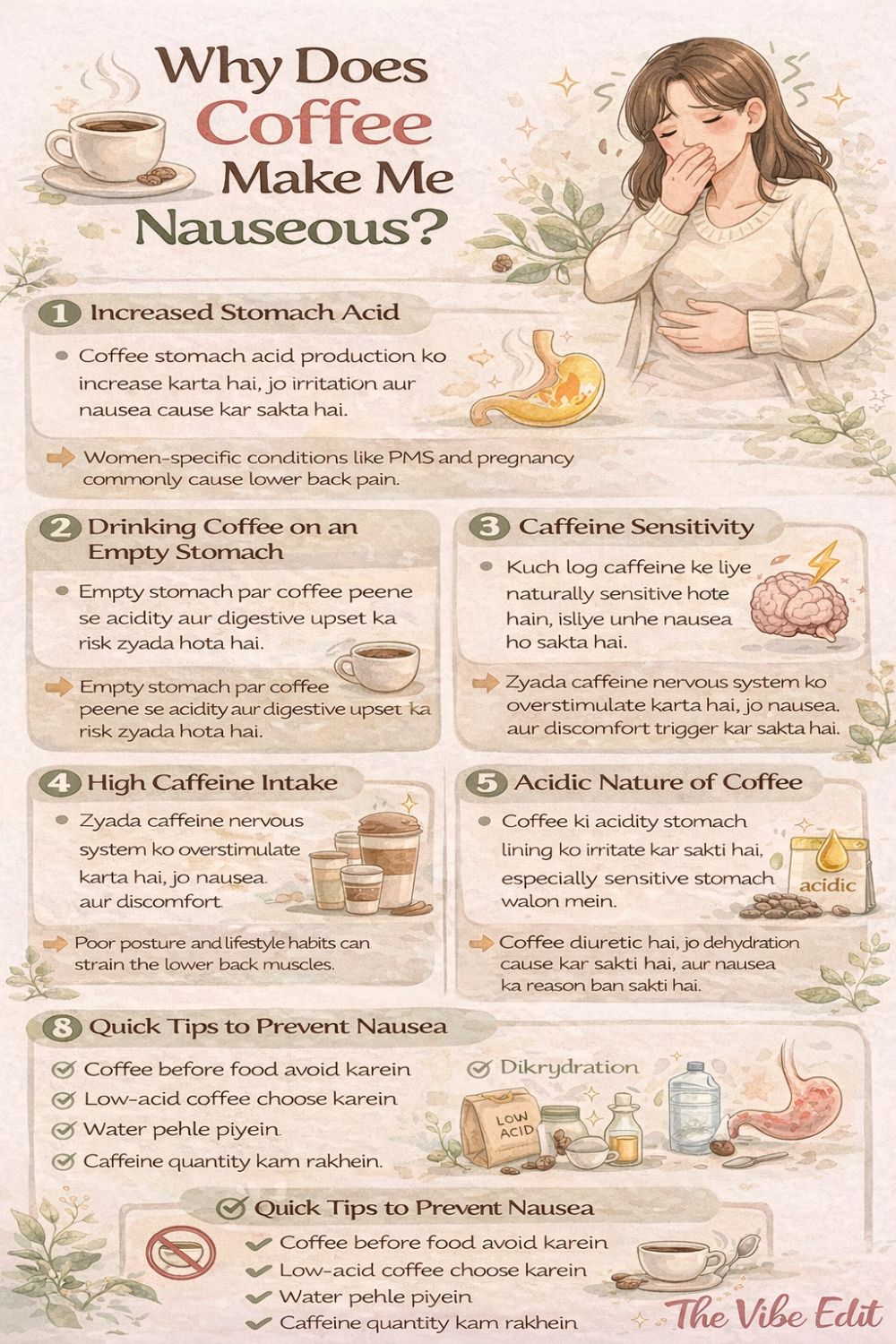
1. Drinking Coffee Without Eating First
This was my biggest mistake. I used to brew my coffee the moment I woke up and drink it while getting ready. No breakfast, no snack, just pure coffee. My empty stomach had zero protection against the surge of caffeine and acid.
When you drink coffee without food, your body absorbs caffeine much faster. This rapid absorption can trigger nausea, jitters, and that uncomfortable feeling in your gut. The stomach acid production spikes with nothing to digest, leading to irritation and sometimes acid reflux.
I started eating just a small piece of toast or a handful of nuts before my coffee, and the difference was immediate. My stomach stopped protesting, and I could actually enjoy my drink.
2. High Caffeine Content Speeds Everything Up
Caffeine acts as a stimulant for your entire digestive tract. It increases gut motility, which means your intestines start contracting faster. While this might sound helpful, it can cause cramping, bloating, and nausea when things move too quickly.
Studies published in medical journals show that caffeine also relaxes the lower esophageal sphincter, the valve that keeps stomach acid from flowing back up into your esophagus. When this valve relaxes, you get heartburn and that sick feeling in your throat.
For people with caffeine sensitivity, even one cup can be too much. I discovered I’m moderately sensitive after testing decaf for a week and feeling significantly better.
3. Natural Acids in Coffee Beans
Coffee naturally contains chlorogenic acids, quinic acid, and citric acid. These compounds give coffee its complex flavor, but they can also irritate sensitive stomachs. The acid levels vary depending on how the coffee is roasted and brewed.
When I learned about this, I switched from light roast to dark roast beans. Dark roast coffee goes through a longer roasting process that breaks down some of these acids, making it gentler on the stomach. The taste took some getting used to, but my stomach appreciated it.
4. Additives: Milk, Cream, and Sweeteners
Sometimes the problem isn’t the coffee itself but what you add to it. Dairy products contain lactose, a sugar that many adults struggle to digest properly. If you’re lactose intolerant even mildly, adding milk or cream to your coffee can trigger nausea, bloating, and stomach discomfort.
Artificial sweeteners can also cause problems. They’re known to disrupt gut bacteria and can cause digestive issues in sensitive people. I switched to oat milk and stopped using artificial sweeteners, which helped reduce my symptoms.
5. Existing Digestive Conditions
If you have IBS, gastritis, or GERD, coffee can make your symptoms worse. These conditions already involve increased stomach acid production or inflammation, and coffee adds fuel to that fire.
People with acid reflux or GERD should be especially careful because caffeine relaxes that crucial valve between the esophagus and stomach. This allows acid to flow backward, causing heartburn and nausea.
6. Pregnancy Changes Everything
During pregnancy, hormone changes slow down digestion and make you more sensitive to caffeine and acids. Many pregnant women who previously loved coffee find themselves feeling nauseous after just a few sips.
My sister experienced this during her first trimester. The smell alone made her sick. Her doctor recommended cutting back to half a cup if she really wanted it, but she ended up switching to herbal tea instead.
7. Dehydration Amplifies the Problem
Coffee is a mild diuretic, meaning it makes you urinate more frequently. This can lead to dehydration, which itself causes nausea and headaches. When you’re already slightly dehydrated and then drink coffee, you’re setting yourself up for feeling sick.
I started drinking a full glass of water before my coffee and another one with it. This simple habit made a noticeable difference in how I felt throughout the morning.
Proven Ways to Stop Coffee Nausea
Eat Something First
This is the most important fix. Even a small snack with protein or complex carbohydrates can protect your stomach. I keep almonds, whole grain crackers, or a banana nearby. Eating just 10-15 minutes before coffee gives your stomach something to work with besides just acid.
The food slows down caffeine absorption, which means you get a steadier energy boost without the jittery, nauseous feeling. It also gives the stomach acid something productive to digest instead of irritating your stomach lining.
Switch Your Coffee Type
Cold brew coffee has up to 70% less acid than regular hot-brewed coffee. The cold water extraction process doesn’t pull out as many acidic compounds. When I switched to cold brew, I noticed less heartburn and nausea right away.
Dark roast beans are another good option. The longer roasting time breaks down more of the problematic acids. Some brands also sell low-acid coffee specifically designed for sensitive stomachs. These are worth trying if you love coffee but struggle with nausea.
Try Decaf or Reduce Caffeine
Decaf coffee still contains small amounts of caffeine, but usually 97% less than regular coffee. For many people, this reduction is enough to eliminate nausea while still providing the comforting ritual of drinking coffee.
I did a three-day test where I drank only decaf. My symptoms improved by about 60%. This told me that caffeine was a major contributor to my nausea, even though I didn’t want to admit it at first.
Stay Hydrated
Drink water before, during, and after your coffee. A good rule is one glass of water for every cup of coffee. This prevents dehydration and helps dilute the acid in your stomach.
I started keeping a water bottle on my desk and made it a habit to finish it by mid-morning. This simple change reduced my afternoon nausea episodes significantly.
Adjust Your Brewing Method
How you brew matters. French press and espresso methods tend to produce coffee with higher acid levels. Cold brew and pour-over methods typically result in less acidic coffee.
I bought an inexpensive cold brew maker and started preparing batches on Sunday evenings. Having ready-made, stomach-friendly coffee in my fridge made mornings easier and my stomach happier.
Consider Timing and Quantity
I used to drink three cups before noon. Now I stick to one cup with breakfast and maybe a second one mid-morning if I’ve eaten again. Spreading out your coffee intake and pairing it with food helps your body handle the caffeine and acids better.
Some people find that drinking coffee later in the morning, after they’ve been awake for an hour or two and have eaten breakfast, reduces nausea.
My 3-Day Self-Test Method
If you’re not sure what’s causing your coffee nausea, try this systematic approach that helped me identify my triggers:
- Day 1: Drink decaf coffee with breakfast. Note how you feel for the next three hours. If you still feel nauseous, caffeine might not be your main problem.
- Day 2: Try cold brew or dark roast regular coffee with a substantial breakfast. This tests whether acid levels are the issue.
- Day 3: Have your regular coffee but drink a full glass of water first and eat a protein-rich snack. This tests whether dehydration or an empty stomach is the culprit.
Keep notes on your symptoms each day. This gives you clear data about what works for your body.
When to See a Doctor About Coffee Nausea
Most coffee-induced nausea is manageable with the strategies I’ve shared. However, certain symptoms require medical attention. See a doctor if you experience:
Severe or persistent nausea that doesn’t improve with changes Vomiting that contains blood or looks like coffee grounds Severe abdominal pain that lasts more than a few hours Unexplained weight loss along with digestive issues Black, tarry stools which can indicate bleeding
These symptoms could indicate gastritis, ulcers, or other serious conditions that need proper medical treatment. Don’t ignore warning signs just because you love your coffee.
Frequently Asked Questions
Can drinking coffee on an empty stomach make me nauseous?
Yes, absolutely. Coffee on an empty stomach increases acid production with no food to buffer it, and caffeine gets absorbed much faster, commonly causing queasiness and discomfort. Eating even a small snack before coffee can prevent this.
Is caffeine or acid more to blame for nausea?
Both contribute significantly. Caffeine speeds up gut activity and relaxes the esophageal valve that keeps acid down, while coffee acids directly irritate the stomach lining. Sensitive people often react to both components.
Will switching to decaf help my coffee nausea?
Many people see significant improvement with decaf. Try drinking decaf for three to five days and compare your symptoms. If you feel better, caffeine was likely the main trigger for your nausea.
Are certain brewing methods gentler on the stomach?
Yes, cold brew and dark roasts contain fewer acidic compounds than light roasts and hot-brewed coffee. The cold water extraction process and longer roasting times reduce the acids that irritate sensitive stomachs.
When should I see a doctor about coffee making me sick?
If nausea is severe, persistent despite trying different approaches, or accompanied by vomiting, blood in stool, severe pain, or unexplained weight loss, consult a doctor. These could indicate GERD, ulcers, gastritis, or other conditions needing treatment.
Two Quick Tips to Try Today
- Eat a small protein snack before your cup. A handful of nuts, a piece of cheese, or whole grain toast provides the buffer your stomach needs against coffee’s effects. This single change helped me more than anything else.
- Swap to cold brew or decaf for three days. This quick experiment tells you whether caffeine or acids are your main problem. Track how you feel each morning to identify clear patterns in your symptoms.
Final Thoughts
Dealing with coffee nausea was frustrating, but understanding why it happens made fixing it possible. I didn’t have to give up coffee completely. I just needed to be smarter about how, when, and what type I drank.
The biggest game-changers for me were eating before coffee, switching to cold brew or dark roast, and staying properly hydrated. These simple adjustments let me keep enjoying my morning ritual without the sick feeling that used to follow.
If coffee makes you nauseous, start with one or two of these strategies. Pay attention to how your body responds, and adjust accordingly. Your perfect coffee routine exists, it just might look different than what you’re doing now.
Remember, everyone’s digestive system is unique. What works for me might need tweaking for you. Be patient with yourself as you figure out your triggers, and don’t hesitate to talk to a doctor if symptoms persist or worsen.