
Last month, I woke up with a throbbing pain on the right side of my face. At first, I thought it was just another headache, maybe from staring at my laptop too long. But when I pressed on my upper jaw, the pain shot straight up to my temple. That’s when I realized something wasn’t right.
I spent the next two days trying to figure out if my tooth was causing my headache or if my headache was making my tooth hurt. Turns out, they were connected in ways I never imagined. If you’re dealing with both right now, I know how confusing and frustrating it can be.
Quick Answer Box: Tooth pain and headache often occur together because nerves in your face share pathways. A dental abscess, TMJ disorder, teeth grinding, or sinus infection can trigger both. See a dentist if you notice swelling, fever, or pain that gets worse despite taking over-the-counter pain relief.
What’s Really Happening When Your Tooth and Head Hurt Together
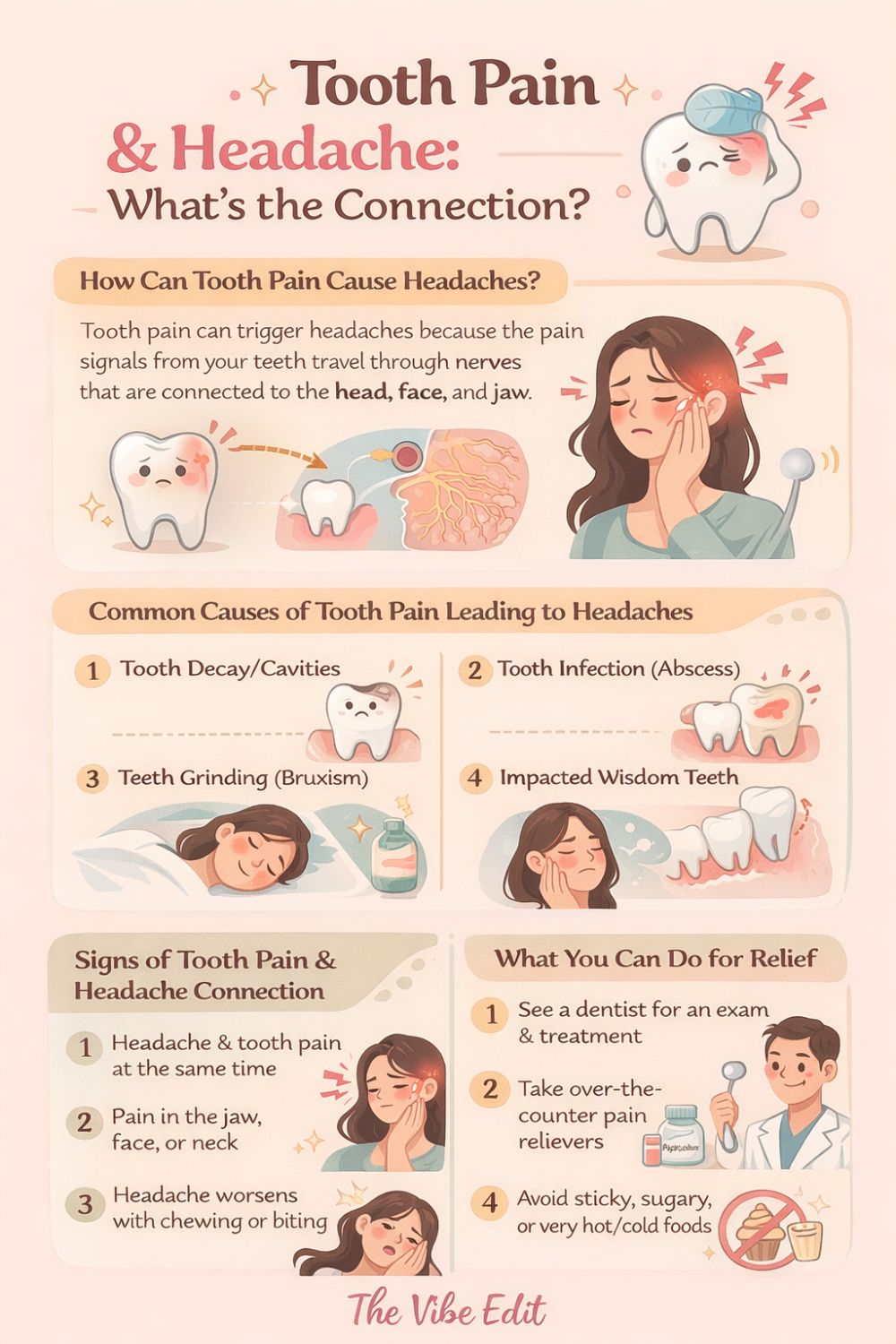
Your face has this massive nerve called the trigeminal nerve, and it’s basically the information highway for sensation in your entire face. This nerve branches out into three main paths, and one of them goes straight through your upper and lower jaw.
When something goes wrong with a tooth, that pain signal travels along the trigeminal nerve. Sometimes your brain gets confused about where the pain is actually coming from, so a problem in your tooth feels like a headache, or vice versa. It’s called referred pain, and it happens more often than you’d think.
The maxillary sinus sits right above your upper teeth. When this space gets inflamed or infected, the pressure pushes down on your tooth roots. Suddenly you have what feels like a toothache causing headache, but the real problem is in your sinuses.
I learned this the hard way when what I thought was a cavity turned out to be a sinus infection. My dentist pressed on my upper molars and asked if the pain changed when I bent over. It did. That was the clue.
The Main Reasons You’re Getting Both Tooth Pain and Headache
Dental Abscess Creates Double Trouble
A dental abscess is basically a pocket of infection at the root of your tooth or in your gums. The infection builds up pressure, and that pressure radiates everywhere. You get intense, throbbing pain in the tooth that doesn’t quit, plus a headache that painkillers barely touch.
Tooth infection doesn’t stay quiet. You’ll notice your gum swelling up, maybe some redness, and if you press on the area, the pain gets sharper. Sometimes you’ll even taste something bitter in your mouth. That’s pus draining from the abscess, and yes, it’s as gross as it sounds.
My neighbor dealt with this last year. She ignored a cracked tooth for months, thinking the occasional pain would go away. By the time she went to the dentist, the infection had spread so much that half her face was swollen. She needed emergency antibiotics and a root canal to save the tooth.
Sinus Problems Masquerading as Tooth Pain
Sinus toothache and headache go hand in hand during cold season or allergy flare-ups. When your maxillary sinus fills with mucus and gets inflamed, the pressure bears down on the roots of your upper back teeth.
Here’s how you can tell if it’s sinus-related. The pain usually hits multiple upper teeth at once, not just one specific spot. When you bend forward or lie down, the pain gets worse because fluid shifts in your sinuses. You’ll also probably have nasal congestion, a stuffy feeling in your cheeks, and maybe some post-nasal drip.
I get this every monsoon season. The change in air pressure triggers sinusitis, and within a day, my upper molars start aching. A warm compress on my cheeks and some steam inhalation usually helps more than dental painkillers.
TMJ Disorder Spreading Pain Everywhere
TMJ tooth pain headache is sneaky because the problem isn’t actually in your teeth. Your temporomandibular joint connects your jaw to your skull, and when it gets inflamed or misaligned, the pain spreads fast.
You’ll feel it in your jaw, your teeth, your temples, even down your neck sometimes. The pain often gets worse when you chew, yawn, or talk for a long time. Some people hear clicking or popping sounds when they open their mouth.
Jaw pain from TMJ can make your teeth hurt even when there’s nothing wrong with them. The muscles around your jaw get so tight and inflamed that everything in that area starts screaming.
Bruxism Grinding Away Your Comfort
Bruxism morning headache tooth pain is what happens when you clench or grind your teeth at night. Most people don’t even know they’re doing it until someone tells them or they wake up with a sore jaw and a pounding head.
Grinding wears down your tooth enamel, makes your teeth sensitive, and overworks the muscles in your jaw and temples. By morning, you feel like someone punched you in the face. The headache sits right at your temples or the base of your skull, and your teeth might feel sore when you bite down.
Stress makes it worse. During exam season or when work gets intense, I catch myself clenching my jaw even during the day. My dentist fitted me with a night guard, which looks ridiculous but actually works.
When Tooth Sensitivity Triggers Head Pain
Tooth sensitivity can start small but grow into something that affects your whole day. When the protective enamel wears away or your gums recede, the inner layer of your tooth gets exposed. Hot coffee, cold water, sweet foods, even cold air can trigger sharp pain.
That sudden jolt of pain activates the trigeminal nerve, and sometimes the signal is so strong it triggers a headache. It’s not as common as the other causes, but it happens.
How to Tell What’s Causing Your Pain
- Where exactly does it hurt? If the pain stays in one specific tooth and that side of your head, you’re probably dealing with a tooth infection or abscess. If it spreads across multiple upper teeth and your cheeks feel full, think sinuses. If your jaw clicks and the pain reaches your temples, TMJ is likely.
- What makes it worse? Tooth problems get more painful when you bite down, drink something hot or cold, or tap on the tooth. Sinus issues hurt more when you bend over or lie flat. TMJ pain flares up when you chew or open your mouth wide. Bruxism hurts most in the morning.
- Are there other symptoms? Fever and facial swelling point to infection. Nasal congestion and facial pressure suggest sinuses. Jaw clicking or ear fullness hints at TMJ.
I kept a pain diary for three days when I couldn’t figure out what was wrong. Writing down when the pain hit, what I was doing, and what it felt like helped my dentist diagnose the problem in minutes.
What Dentists and Doctors Do to Find the Problem
A thorough dental exam starts with your dentist asking when the pain started and what triggers it. They’ll tap on your teeth with a small instrument to see which one responds. This percussion test sounds simple, but it’s incredibly accurate for finding infected teeth.
X-rays show what’s happening under the surface. An abscess appears as a dark spot at the root of the tooth. Bone loss around a tooth suggests gum disease. Sinus inflammation shows up as cloudiness in the sinus cavity.
If your dentist suspects TMJ, they’ll watch how your jaw moves and feel the joint while you open and close your mouth. Sometimes they’ll refer you to an oral surgeon or a TMJ specialist for advanced imaging.
For sinus-related issues, your primary care doctor or an ENT specialist can examine your nasal passages and sinuses. They might order a CT scan if the infection is severe or recurring.
The key is being honest about all your symptoms, even the ones that seem unrelated. That weird ear pressure or the fact that your pain gets worse at night could be the clue that solves the puzzle.
Treatment Options That Actually Work
For Dental Abscess and Infection
You need professional treatment, period. Antibiotics can control the infection temporarily, but they won’t fix the underlying problem. Your dentist will either perform a root canal to save the tooth or extract it if it’s too damaged.
Root canals get a bad reputation, but modern techniques make them relatively comfortable. The dentist removes the infected pulp, cleans out the inside of the tooth, and seals it. The procedure stops the pain and saves your tooth.
If the tooth can’t be saved, extraction is the next option. Once the infected tooth is gone and the area heals, the headaches stop too.
For Sinus Problems
Sinusitis treatment depends on what’s causing it. Bacterial infections need antibiotics. Viral infections just need time and symptom management. Allergies respond to antihistamines and nasal sprays.
I use a saline rinse twice a day during sinus season, and it makes a huge difference. Staying hydrated and using a humidifier helps keep mucus thin and draining.
If you get chronic sinus infections, an ENT doctor might recommend surgery to improve drainage, but that’s usually a last resort.
For TMJ Disorder
Treatment starts conservatively. A custom night guard protects your teeth and reduces jaw strain. Physical therapy exercises strengthen and relax the jaw muscles. Warm compresses and gentle massage provide relief.
Avoiding hard or chewy foods gives your jaw a break. Cut apples into smaller pieces, skip the tough meat, choose softer options.
Some people benefit from stress management techniques like meditation or therapy, since stress often triggers jaw clenching.
In severe cases, your dentist might recommend muscle relaxants, corticosteroid injections, or even surgery, but most people get better with simpler treatments.
For Bruxism
A night guard is the gold standard. It cushions your teeth and prevents grinding damage. Combined with stress reduction and better sleep habits, it usually solves the problem.
Some people find that reducing caffeine, especially in the afternoon, helps. Others benefit from a bedtime routine that includes jaw stretches and relaxation exercises.
If anxiety or sleep disorders are driving your bruxism, treating those underlying issues helps more than anything else.
Safe Relief at Home and When to Get Help NOW
For immediate relief while waiting for your dental appointment:
Rinse your mouth with warm salt water three times a day. Mix half a teaspoon of salt in a cup of warm water, swish it around for 30 seconds, and spit it out. This reduces inflammation and helps keep the area clean.
Take over-the-counter pain relief like ibuprofen or acetaminophen according to package directions. Never place aspirin or painkillers directly on your gums because it can burn the tissue.
Apply a cold compress to the outside of your cheek for 15 minutes at a time to reduce swelling. For sinus pain, alternate with warm compresses to help drainage.
Sleep with your head elevated. Extra pillows reduce blood flow to your head and decrease throbbing pain.
Red flags that mean you need urgent care:
Fever over 101°F suggests spreading infection. Swelling that affects your breathing or swallowing is a medical emergency. Severe pain that doesn’t respond to painkillers needs immediate evaluation. Pus draining from your gums or a foul taste that won’t go away indicates active infection.
If the pain started after a facial injury or tooth trauma, don’t wait. See a dentist or go to urgent care that day.
My grandfather ignored tooth pain for a week because he didn’t want to bother anyone. By the time my grandmother dragged him to the dentist, the infection had spread to his jaw bone. He needed IV antibiotics and was miserable for weeks. Don’t be like him.
Keeping Your Teeth and Head Happy Long-Term
Daily oral hygiene matters more than you think. Brush twice a day with fluoride toothpaste, floss once a day, and don’t skip it even when you’re tired. Those few minutes prevent most dental problems.
See your dentist every six months for cleanings and checkups. They catch small problems before they become painful emergencies.
If you grind your teeth, wear your night guard consistently. Yes, it feels weird at first, but you’ll get used to it.
Manage stress through whatever works for you. Exercise, meditation, talking to friends, therapy. Chronic stress shows up in your jaw and teeth.
Stay hydrated. Dry mouth increases cavity risk and makes sinus problems worse.
If you have seasonal allergies or frequent sinus infections, work with your doctor to get them under control. Preventing sinus inflammation prevents the sinus toothache and headache cycle.
Common Questions About Tooth Pain and Headache
Can a cavity cause a headache?
Yes, absolutely. Deep decay irritates the nerve inside your tooth, and that irritation can refer pain into your head through the trigeminal nerve pathways.
When is tooth pain with fever an emergency?
If you have fever above 101°F, facial swelling that affects your breathing or swallowing, or redness spreading from the painful area, get to urgent care or an emergency room immediately. These signs suggest the infection is spreading.
How do I know if it’s sinus pain or tooth pain?
Sinus pain usually affects multiple upper teeth and feels like pressure across your cheeks. It gets worse when you bend forward or lie down. Dental pain is more localized to one or two teeth and gets sharper when you bite down or consume hot or cold foods.
Will antibiotics fix a tooth abscess?
Antibiotics control the infection and reduce swelling, but they’re a temporary fix. You still need definitive dental treatment like a root canal or extraction to actually solve the problem.
Can grinding my teeth cause morning headaches?
Yes, bruxism overworks your jaw muscles and creates tension that radiates into your temples and the base of your skull. A night guard combined with stress management usually helps.
Two Quick Tips From My Experience
Try warm salt water rinses and over-the-counter pain relief for immediate comfort, but never place pills directly against your gums. The medication can burn the delicate tissue and make things worse.
If your upper tooth pain comes with nasal congestion and facial pressure, mention both the dental symptoms and the sinus symptoms to your dentist and your primary care doctor. Sometimes you need treatment from both to fully resolve the problem.
Taking Care of Yourself
Tooth pain and headache together are miserable, but they’re also your body’s way of telling you something needs attention. Whether it’s an infection, sinus inflammation, TMJ issues, or nighttime grinding, the solution exists once you identify the cause.
Don’t try to tough it out or rely on painkillers indefinitely. Those masks the problem without fixing it. Book a dental exam if you’re experiencing persistent or severe pain, especially with swelling, fever, or symptoms that interfere with eating or sleeping.
I wish someone had told me sooner that tooth and head pain are often connected. It would have saved me days of confusion and discomfort. Now you know what I learned the hard way, and hopefully, you can get the right treatment faster.
Take care of your teeth, pay attention to what your body is telling you, and don’t hesitate to get professional help. Your future self will thank you.