

I remember sitting at my desk three years ago, pressing my temples while that familiar burning crept up my chest. The headache would start about an hour after dinner, and I’d pop antacids like candy, assuming they were separate problems. My grandfather had terrible digestive issues his whole life, and my grandmother spent decades researching natural remedies in her worn notebook. She always said the stomach and head are more connected than we think. Turns out, she was right.
Yes, acid reflux and GERD can trigger headaches. Research shows people with GERD have a higher risk of migraines through mechanisms like vagus nerve irritation, gut-brain axis signaling, sleep disruption, and inflammation. Managing your reflux symptoms often reduces headache frequency.
If you’re dealing with both heartburn and persistent headaches, you’re not imagining the connection. Let me walk you through what science actually says, how these two conditions talk to each other in your body, and the practical steps that finally helped me break the cycle.
What Is Acid Reflux and Why Does It Matter?
Acid reflux happens when stomach acid flows backward into your esophagus, that tube connecting your mouth to your stomach. You know that burning sensation behind your breastbone? That’s it. When this happens regularly (twice a week or more), doctors call it GERD or gastroesophageal reflux disease.
About 20% of Americans deal with GERD according to the National Institute of Diabetes and Digestive and Kidney Diseases. That’s one in five people walking around with chronic heartburn. I was part of that statistic for years before connecting it to my headaches.
The symptoms everyone talks about are the obvious ones: burning chest pain, sour taste in your mouth, trouble swallowing. But GERD shows up in sneakier ways too. Some people get a chronic cough, hoarse voice, or feel like something’s stuck in their throat. And yes, headaches can be part of this picture.
The Types of Headaches Connected to Reflux
Not all headaches are created equal, and reflux doesn’t cause just one type. Here’s what I’ve learned:
- Tension headaches feel like a tight band around your head. When you’re dealing with chronic discomfort from reflux, your neck and shoulder muscles tense up, creating this pressure. I’d wake up with these after nights of bad heartburn.
- Migraine attacks are the heavy hitters. These aren’t just bad headaches. They’re throbbing, often one-sided pain that can last hours or days, sometimes with nausea, light sensitivity, and that weird visual aura some people get. The research linking GERD and migraine is actually pretty solid now.
- Sinus-like headaches create pressure around your forehead, cheeks, and eyes. Acid can irritate your throat and sinuses when it backs up, mimicking sinus infection symptoms without the actual infection.
I experienced all three types at different points. The migraines were the worst, leaving me unable to function for entire days.
What Does the Research Actually Show?
This isn’t just anecdotal. Scientists have been studying the acid reflux headache connection for years, and the evidence keeps getting stronger.
A 2008 study found that people with frequent heartburn reported headaches way more often than people without digestive issues. The overlap was significant enough that researchers started asking why.
Fast forward to 2024, and we got something even more convincing. A large Mendelian randomization study (that’s a genetic study that helps prove cause and effect) published in a major medical journal showed that GERD increases migraine risk. This wasn’t just correlation anymore. The genetic data suggested GERD might actually trigger migraines in some people.
Multiple observational studies back this up. People with GERD and headaches report them together far more than chance would predict. The Mayo Clinic has documented this gut-brain connection extensively, noting that gastrointestinal problems and migraines often travel as a pair.
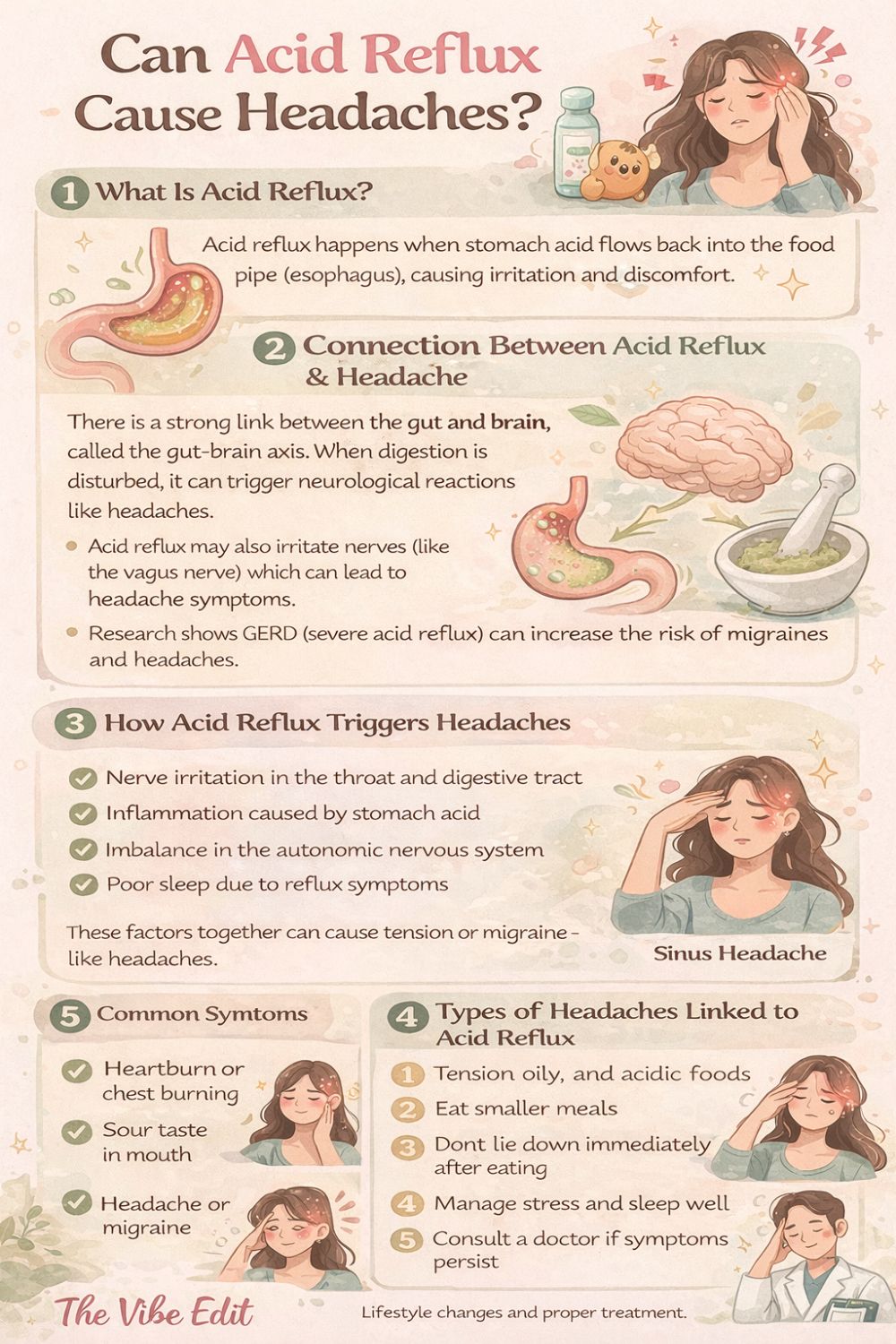
How Reflux Actually Triggers Your Headaches
Okay, so the link exists. But how does acid in your esophagus cause pain in your head? There are several pathways, and they’re all fascinating.
The Gut-Brain Axis Connection
Your gut-brain axis is basically a superhighway of communication between your digestive system and your brain. It’s not just one-way traffic either. Your gut sends signals up through nerves, hormones, and even immune system messengers.
When acid irritates your esophagus, it sets off an inflammatory response. Those inflammatory signals travel up to your brain, potentially triggering headache pathways. Think of it like pulling a fire alarm in one building that sets off alarms in the building next door.
I didn’t understand this for the longest time. I thought my stomach and my head were completely separate systems. They’re not. They’re constantly talking to each other.
Vagus Nerve Irritation
The vagus nerve is this massive nerve that runs from your brain down through your neck, chest, and into your abdomen. It controls a ton of automatic functions including digestion. When stomach acid irritates your esophagus, it can irritate the vagus nerve too.
This nerve irritation can trigger headache responses. It’s like stepping on a garden hose. The pressure and disruption at one point affects the whole system. Some researchers think this vagus nerve pathway explains why treating reflux helps some people’s migraines.
Sleep Disruption Creates a Vicious Cycle
Here’s where things get really frustrating. Sleep disruption from nighttime reflux can trigger headaches, and poor sleep quality makes both conditions worse.
I used to wake up at 2 AM with acid in my throat. I’d be up for an hour or more, and the next day I’d have a pounding headache. Lack of quality sleep is one of the most common migraine triggers. When reflux destroys your sleep, it’s basically handing headaches an open invitation.
Both GERD and migraines involve inflammation. When your body is in a chronic inflammatory state from ongoing reflux, it’s more susceptible to migraine attacks. Some people are just prone to inflammatory conditions, and they end up with both problems.
Medication Side Effects
Here’s an ironic twist. Some proton pump inhibitors (PPIs) and antacids that treat reflux have been associated with increased headache risk in certain studies. Not everyone experiences this, but it’s worth knowing. I switched from one PPI to another after the first one seemed to make my head pain worse.
When Symptoms Overlap and When They Don’t
Learning to tell the difference between reflux-related headaches and other types took me months of tracking. Here’s what helped:
Classic GERD symptoms include heartburn, regurgitation, chest pain, difficulty swallowing, and chronic cough. If your headaches come with these, especially after meals or when lying down, reflux is likely involved.
Red flag symptoms mean something else might be happening. Sudden severe headaches, headaches with fever or stiff neck, vision changes, confusion, or headaches after head injury need immediate medical attention. Don’t assume everything is reflux.
Sometimes back pain shows up with both conditions. GERD can cause referred pain to your back, and some headaches come with neck and upper back tension. I’d get this tight knot between my shoulder blades that seemed connected to both my heartburn and my head pain.
Treatment Approaches That Actually Worked
After trying everything from my grandmother’s remedies to prescription medications, here’s what made a real difference:
Lifestyle Changes First
Meal timing was huge for me. No eating within three hours of bedtime. Period. This one change cut my nighttime reflux by half, and my morning headaches dropped dramatically.
Smaller, more frequent meals instead of three big ones helped too. Large meals put more pressure on that valve between your stomach and esophagus, making reflux worse.
Avoiding trigger foods matters. For me, it was coffee (heartbreaking), chocolate (devastating), tomato sauce, and anything spicy. Your triggers might be different. Keep that food diary.
Sleep Position Changes
Elevating the head of my bed by six inches using blocks under the bed frame (not just extra pillows) changed my life. Sleep quality improved, reflux decreased, and headaches became less frequent.
Sleeping on my left side also helped. Something about anatomy and the way your stomach sits makes left-side sleeping better for reflux.
Medical Treatment Options
Antacids like Tums or Rolaids work for occasional heartburn but don’t prevent it. I keep them around for breakthrough symptoms.
H2 blockers (like Pepcid) reduce acid production and work faster than PPIs. They can be good for mild to moderate symptoms.
PPIs (omeprazole, esomeprazole, lansoprazole) are the heavy hitters for chronic GERD. They dramatically reduce acid production. I take one daily and it’s been life-changing, though I monitor for side effects.
For headaches specifically, talking to both my gastroenterologist and neurologist helped create a comprehensive treatment plan. Sometimes you need specialists working together.
When to Stop Googling and See a Doctor
I waited way too long to get proper help. Here’s when you shouldn’t:
If headaches are severe, sudden, or different from your usual pattern, get checked out. New headaches after age 50 need evaluation. Headaches with fever, stiff neck, confusion, vision problems, or weakness are emergencies.
For reflux, see a doctor if you have persistent heartburn despite over-the-counter medications, difficulty swallowing, unexplained weight loss, persistent vomiting, or chest pain (yes, even if you think it’s just heartburn).
Tests your doctor might recommend include endoscopy to look at your esophagus directly, pH testing to measure acid levels over 24 hours, or imaging studies. For headaches, you might need a neurology referral, especially if migraines are involved.
Preventive Steps That Keep Both Problems at Bay
After years of dealing with this, prevention became my focus. Here’s my daily lifestyle routine:
Weight management helps. Even losing 10-15 pounds reduced my reflux symptoms significantly. Extra weight puts pressure on your stomach, pushing acid up.
I practice better sleep hygiene. Same bedtime every night, cool dark room, no screens for an hour before bed. Quality sleep prevents both reflux and headaches.
Stress management through yoga and meditation made a bigger difference than I expected. Stress tightens your stomach, increases acid production, and triggers headaches. It’s a triple threat.
Staying hydrated throughout the day (but not chugging water right before bed) keeps everything flowing properly. I aim for eight glasses spread across the day.
Frequently Asked Questions
Can acid reflux actually trigger a migraine?
Yes, research including a 2024 Mendelian randomization study shows GERD increases migraine risk through mechanisms like gut-brain axis signaling, vagus nerve irritation, and sleep disruption. The connection is real and backed by genetic evidence.
Are headaches a common reflux symptom?
Headaches aren’t a classic GERD symptom like heartburn, but many people with chronic headaches also report reflux symptoms. The overlap is common enough that you should explore the connection if you have both.
Can reflux medications cause headaches?
Some studies found that PPIs and antacids are associated with increased headache risk in certain people. It doesn’t happen to everyone, but if your headaches started or worsened after beginning reflux medication, discuss alternatives with your doctor.
What should I change first to test the link?
Track your triggers with a food and symptom diary for two weeks. Avoid eating within three hours of bedtime, elevate the head of your bed, and focus on improving sleep quality. If your headaches decrease, reflux was likely contributing.
When should I see a doctor about this?
See a healthcare provider if headaches are severe, new, or worsening, or if they come with warning signs like vision changes, confusion, or persistent vomiting. Also seek help for reflux symptoms that don’t improve with over-the-counter treatments or if you have difficulty swallowing or unexplained weight loss.
Two Quick Tips to Start Today
Keep a two-week food and symptom log. Write down what you eat, when you eat it, your sleep quality, and when headaches occur. Patterns will emerge that help you identify your specific triggers. I use a simple notebook, nothing fancy.
Try a two-week trial of nighttime reflux measures. No food or drinks (except water) two hours before bed, elevate the head of your bed, and avoid lying down right after meals. Track your headache frequency. If it drops, you’ve found part of your solution.
Moving Forward
The connection between acid reflux and headaches isn’t in your head (well, technically the headache is, but you know what I mean). It’s real, it’s documented, and most importantly, it’s treatable.
My grandmother’s notebook full of observations about my grandfather’s symptoms was onto something. She noticed that when his digestion was under control, he felt better overall. She tracked his lifestyle changes and their effects decades before we had fancy research studies proving the gut-brain axis connection.
You don’t have to accept chronic pain as normal. Start with the simple changes. Track your patterns. Work with healthcare providers who take both issues seriously. The combination of evidence-based treatment and thoughtful lifestyle adjustments can break the cycle.
I went from having headaches 15-20 days a month to maybe 3-4. My reflux is controlled. I sleep through the night. It took time, experimentation, and patience, but understanding how these conditions connect gave me the roadmap to feeling human again.