
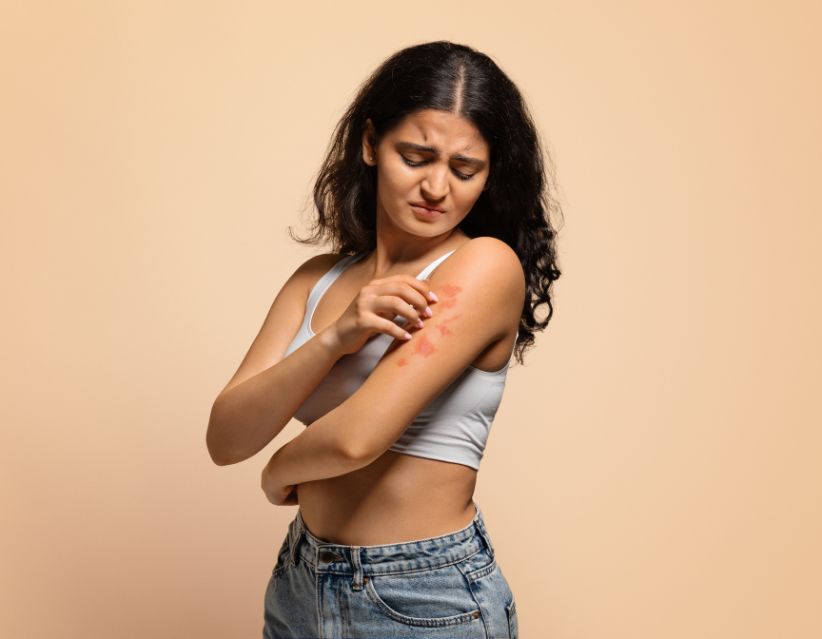
I still remember sitting in my college dorm room, staring at the back of my knees, completely confused. Was it psoriasis? Was it eczema? I had no idea. My skin was red, itchy, and flaking, and every time I searched online, I ended up more confused than before. That moment is exactly why I am writing this today. If you are staring at a patch of irritated skin right now wondering what is actually going on, keep reading. This guide on psoriasis vs eczema will walk you through everything clearly, without the medical jargon overload.
Both are inflammatory skin conditions, but they are not the same thing. Psoriasis usually forms thick, sharply defined, scaly plaques on the scalp, elbows, or knees, while eczema is often itchier, appears in skin folds, and may ooze or crust. Knowing which one you have changes how you treat it, so let’s break this down the right way.
Psoriasis vs Eczema: The Key Differences You Need to Know
Before we get deep into the details, here is a quick side-by-side look that covers the most important angles. Think of this as your cheat sheet.
Eczema tends to show up in skin folds like the inside of your elbows, behind your knees, and around your neck. It often starts in childhood, itches intensely, and can ooze or crust when it flares. The skin barrier is weakened in people with eczema, which is why irritants and allergens trigger it so easily.
Psoriasis looks different. It usually appears on outer surfaces like your elbows, knees, scalp, and lower back. The red patches are covered with thick, silvery scaly plaques that feel almost raised. Psoriasis is driven by the immune system speeding up skin turnover, causing cells to pile up on the surface faster than the body can shed them.
Both conditions cause redness, itching, and flares, but the look, location, and underlying cause are different enough that a dermatologist can usually tell them apart.
Symptoms and Appearance: What Does Each One Actually Look Like?
How Eczema Looks and Feels
If you have eczema, the skin usually looks raw, red, and irritated. During a flare, it can blister, ooze, and then crust over as it heals. The itch is often described as unbearable, especially at night. Scratching only makes it worse, and most people with eczema say the itch is what disrupts their sleep the most.
The skin tends to look dry, patchy, and scaly, but the scales are finer and less defined compared to psoriasis. On darker skin tones, eczema may appear as dark brown, purple, or gray patches rather than red, which is worth knowing because U.S. medical resources sometimes miss this detail.
People with eczema often have a weakened skin barrier. This means moisture escapes and irritants get in more easily. Triggers like rough fabrics, certain soaps, pet dander, sweat, and stress can set off a flare almost instantly.
How Psoriasis Looks and Feels
Psoriasis plaques are thicker and more defined. They often have a silvery-white scale on top of a red base. If you scratch one of those scales off, you might notice tiny pinpoints of bleeding underneath, which doctors call the Auspitz sign.
The itch in psoriasis is real, but many people describe it more as a burning, stinging, or tightening feeling rather than the frantic itch of eczema. The skin can feel almost leathery in affected areas.
On darker skin tones, psoriasis plaques may look more violet or dark brown with gray or silver scaling, rather than the classic pink-red seen in lighter skin. This matters because the wrong visual assumption can delay a correct diagnosis.
Where Does Each Condition Show Up on the Body?
Common Spots for Eczema
Eczema loves skin folds and flexural areas, which are the spots where skin bends and touches itself. That means:
- Inside the elbows (the crease, not the outside)
- Behind the knees
- Around the neck and wrists
- On the hands and feet
- Around the eyes and eyelids
- On the face, especially in babies and young children
This is one of the clearest ways to tell eczema apart from psoriasis. If the rash is tucked into a fold or crease, lean toward eczema first.
Common Spots for Psoriasis
Psoriasis prefers the outer, extensor surfaces of the body. Common locations include:
- The outside of elbows and knees
- The scalp, including the hairline and behind the ears
- The lower back
- The nails, where it can cause pitting, discoloration, or lifting of the nail plate
- The palms and soles in a form called palmoplantar psoriasis
- Joints, in the form of psoriatic arthritis, which affects roughly 30 percent of people with psoriasis
If your scalp has thick, silvery scale and your nails have small pits or a yellowish oil-drop discoloration, psoriasis becomes much more likely.
Causes and Triggers: Why Does Each One Happen?
What Causes Eczema
Eczema, also called atopic dermatitis, is linked to a skin barrier dysfunction combined with an overactive immune response to everyday irritants and allergens. People with eczema often have lower levels of a protein called filaggrin, which normally helps hold the skin barrier together.
Common triggers include:
- Harsh soaps, detergents, or perfumes
- Sweat and heat
- Dry, cold weather
- Stress and anxiety
- Certain fabrics like wool or synthetic fibers
- Pet dander, pollen, or dust mites
- Food sensitivities in some cases
Eczema often runs in families and is connected to other allergic conditions like asthma and hay fever. This cluster is known as the atopic triad.
What Causes Psoriasis
Psoriasis is primarily an immune system condition. The immune system misfires and sends signals that tell skin cells to grow too fast. Normally, skin cells take about a month to cycle from deep layers to the surface and shed off. In psoriasis, this process happens in just a few days, causing cells to pile up as thick plaques.
Common triggers for psoriasis include:
- Stress (a major one)
- Infections, especially strep throat
- Skin injuries like cuts, sunburns, or bug bites (the Koebner phenomenon)
- Certain medications like beta-blockers or lithium
- Alcohol consumption
- Smoking
Psoriasis is also strongly genetic. If one parent has it, you have a higher chance of developing it yourself.
How Dermatologists Diagnose Psoriasis vs Eczema
What Happens at the Doctor’s Office
Most of the time, a dermatologist can diagnose psoriasis or eczema by looking at the skin. They examine the shape, color, scale, and location of the rash, and they ask about your personal and family history.
Some questions a dermatologist might ask:
- When did the rash first appear?
- Does it itch, burn, or sting?
- Does it ooze or crust?
- Where exactly does it show up on your body?
- Does anyone in your family have psoriasis or eczema?
- What seems to make it worse?
In some cases, a skin biopsy is done to confirm the diagnosis. A tiny sample of skin is examined under a microscope. Psoriasis and eczema look distinctly different at the cellular level, so a biopsy can settle the question when the clinical picture is unclear.
Patch Testing for Eczema
If eczema is suspected, a dermatologist might recommend patch testing to identify specific allergens that are triggering flares. This involves placing small amounts of common allergens on the skin under patches for 48 hours and checking the reaction. It helps figure out what to avoid.
Checking for Psoriatic Arthritis
If psoriasis is suspected, your doctor might also ask about joint pain, stiffness, or swelling, especially in the fingers and toes. Catching psoriatic arthritis early is important because it can cause lasting joint damage if left untreated.
Treatment Differences: What Works for Each Condition
Treating Eczema
The main goal of eczema treatment is to repair the skin barrier, reduce inflammation, and avoid triggers. Treatments include:
- Moisturizers and emollients applied right after bathing to lock in moisture (this is the foundation of eczema care)
- Topical corticosteroids to reduce inflammation during flares
- Topical calcineurin inhibitors like tacrolimus for sensitive areas like the face
- Dupilumab, a biologic injection that targets the specific immune pathway driving eczema, approved for moderate to severe cases
- Antihistamines to help manage nighttime itch
- Wet wrap therapy for severe flares in children
Lifestyle adjustments matter a lot with eczema. Short lukewarm showers, fragrance-free products, soft cotton clothing, and a consistent moisturizing routine all help keep flares from starting.
You might also find it helpful to read more about building a good self-care Sunday routine and morning rituals that support your overall skin health from the inside out.
Treating Psoriasis
Psoriasis treatment focuses on slowing down the rapid skin cell turnover and reducing immune-driven inflammation. Options include:
- Topical corticosteroids and vitamin D analogs like calcipotriene for mild to moderate cases
- Coal tar products for scalp psoriasis
- Phototherapy, which uses controlled ultraviolet light to slow skin cell growth
- Methotrexate or cyclosporine, oral medications for more serious cases
- Biologics like adalimumab, secukinumab, or ixekizumab, which target specific parts of the immune system driving psoriasis
- JAK inhibitors, a newer class of oral medications for moderate to severe psoriasis
Unlike eczema, moisturizing alone does not control psoriasis, though it does help with comfort. The immune-targeting treatments are usually what actually bring psoriasis into remission.
For general wellness habits that support your skin from the inside, check out this guide on a morning yoga routine for beginners which can also help manage stress, one of the biggest psoriasis triggers.
Special Cases: Scalp, Nails, Skin Tone, and Overlap
Scalp Psoriasis vs Scalp Eczema
Both conditions can affect the scalp, but they look different. Scalp psoriasis produces thick, silvery scale that extends past the hairline onto the forehead and neck. Scalp eczema (seborrheic dermatitis) tends to be more yellowish and greasy, concentrated on the scalp itself without those sharp-edged plaques.
If you are dealing with scalp issues, a DIY hair mask made with gentle, nourishing ingredients can offer temporary soothing comfort between treatments, though it is not a substitute for medical care.
Nail Changes in Psoriasis
Nail pitting (tiny dents in the nail surface), yellowish discoloration, crumbling nails, and separation of the nail from the nail bed are all signs of psoriasis affecting the nails. Eczema does not typically cause these changes, which makes nails one of the most useful clues for telling the two conditions apart.
Skin Tone Considerations
On medium and darker skin tones, both conditions can look less red and more brownish, grayish, or purple. The scale in psoriasis may appear less silvery and more off-white or gray. This is important because standard descriptions in many medical textbooks are written primarily for lighter skin, which can make diagnosis harder for people with darker complexions. If a dermatologist is dismissing your symptoms because the presentation does not match the textbook image, it is completely reasonable to push for a second opinion or a biopsy.
Can You Have Both at Once?
Yes, it is possible to have both psoriasis and eczema, though it is not common. When they overlap, diagnosis becomes more complicated and treatment needs to be tailored carefully. This is another reason seeing a dermatologist rather than self-treating is the right move.
When to See a Dermatologist
You should make an appointment with a dermatologist if:
- Your rash keeps coming back or is getting worse
- The itching is affecting your sleep or daily life
- You are not sure whether it is psoriasis or eczema
- Over-the-counter creams are not helping after a few weeks
- You notice nail pitting, joint pain, or spreading plaques
- The rash appears on your face, eyelids, or genitals
Early, accurate diagnosis means earlier, more effective treatment. Do not spend months guessing when a single appointment can give you real answers.
5 FAQs About Psoriasis vs Eczema
FAQ 1: Is eczema the same as psoriasis?
No. Eczema is usually itchier and tied to skin-barrier problems and allergic reactions, while psoriasis is an immune-driven condition that causes faster skin cell turnover. They look similar but have different causes, locations, and treatments.
FAQ 2: Which one itches more, psoriasis or eczema?
Eczema usually itches more intensely. The itch in psoriasis is real but often described more as a burning, stinging, or tightening sensation rather than the relentless itch of eczema.
FAQ 3: Can someone have both psoriasis and eczema at the same time?
Yes, it can happen, though it is not common. When both are present, a dermatologist needs to tailor the treatment plan carefully since the two conditions respond differently to certain medications.
FAQ 4: Do psoriasis and eczema show up in different places on the body?
Often yes. Eczema tends to appear in skin folds like the inside of the elbows and behind the knees. Psoriasis is more common on the outer surfaces of the elbows, knees, scalp, and lower back.
FAQ 5: When should I see a dermatologist about my skin?
When the rash keeps returning, is spreading, affects your sleep, involves your nails or joints, or is just plain hard to identify on your own. A dermatologist can give you a definitive answer and a proper treatment plan.
2 Quick Tips
Quick Tip 1: If you cannot tell whether it is psoriasis or eczema, look at the location first. Skin folds point toward eczema. Outer elbows, knees, and scalp point toward psoriasis. That single clue narrows it down fast.
Quick Tip 2: Do not rely only on moisturizers if you suspect psoriasis. Moisturizing helps with comfort but does not treat the underlying immune process. See a dermatologist and ask about targeted treatments that actually bring the condition into remission.
The difference between psoriasis vs eczema is real and it matters. These are not the same condition, even if they both involve red, irritated, itchy skin. Knowing where to look, what to look for, and when to get help is the first step toward actually feeling better.
Visit Vibe Edits for more honest, practical health and wellness content written from real-life experience.