

Last month, I was brushing my teeth when I felt something weird with my tongue. A small bump on my gum, right near my back molar. My heart sank. Was it serious? Cancer? An infection? I immediately called my dentist, and what I learned during that journey helped me understand that most gum bumps are actually common and treatable.
Let me share everything I discovered, so you don’t have to panic like I did.
What Is That Bump on Gums You’re Feeling?
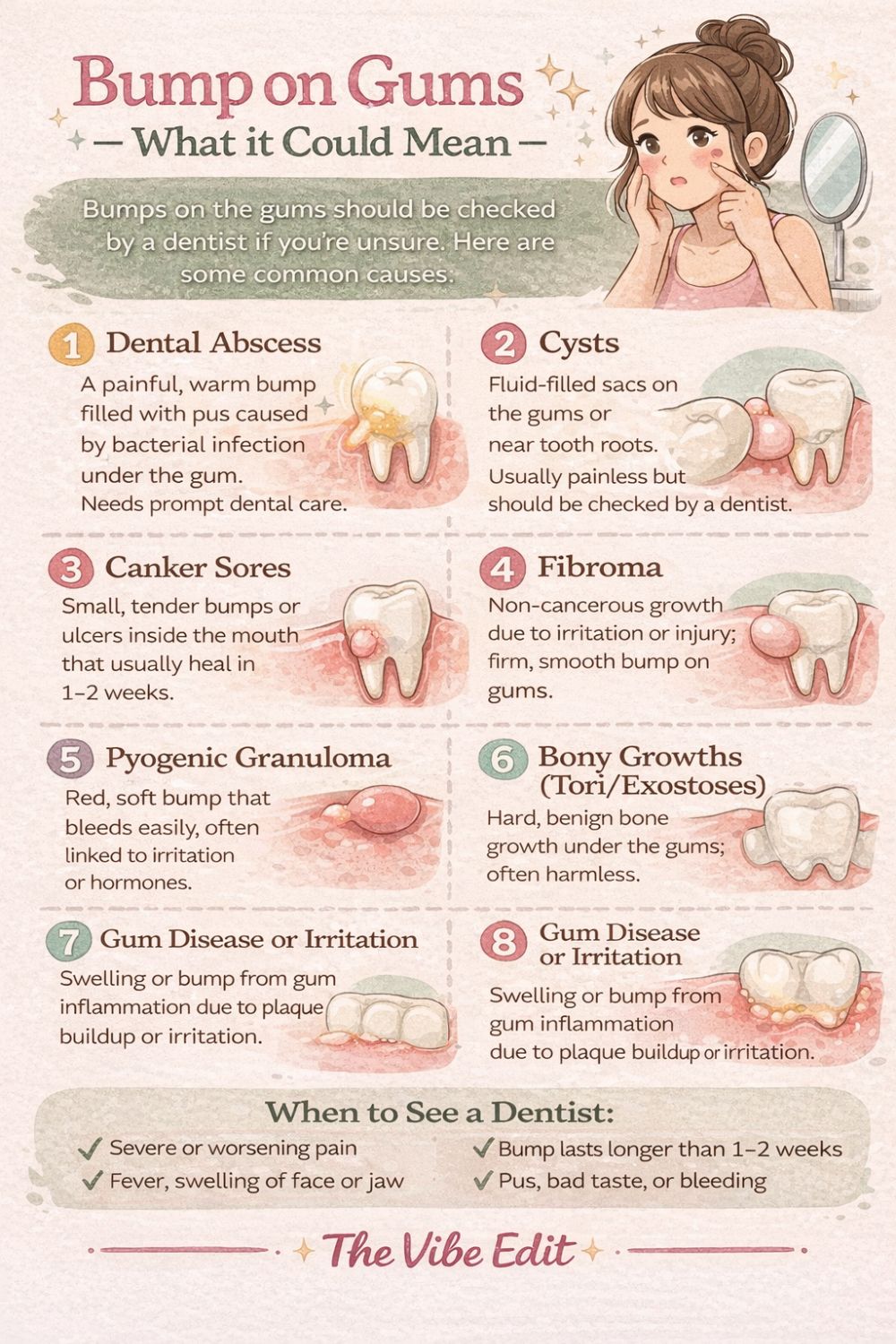
A bump on the gums can come from a cyst, oral fibroma, gum abscess, or a pyogenic granuloma. Most bumps are benign; painful, growing, bleeding, or non-healing bumps require prompt dental evaluation to rule out infection or, rarely, oral cancer.
When I first noticed mine, it was tiny and painless. I thought maybe I’d just bitten my gum while eating. But after three days, it was still there, slightly bigger. That’s when I knew I needed to understand what was happening inside my mouth.
Understanding Common Causes of Gum Bumps
Oral Fibroma: The Harmless Lump
An oral fibroma is basically scar tissue that forms when you repeatedly irritate the same spot. Mine turned out to be exactly this. I had been biting the inside of my cheek while stressed about work deadlines.
These firm, smooth bumps are usually painless. They develop slowly over weeks or months and often appear near areas where you accidentally bite or where dental appliances rub against your gums.
Gum Cyst: The Fluid-Filled Bubble
A gum cyst forms when minor salivary glands get blocked. My dentist explained these as little fluid-filled sacs that can appear anywhere on your gums. They’re soft when you press them, unlike the firm feeling of a fibroma.
These bumps rarely hurt unless they get infected. They might shrink on their own, but larger ones need professional removal to prevent recurring swelling.
Gum Abscess Symptoms: The Red Alert
Here’s where things get serious. A gum abscess is a pocket of pus caused by bacterial infection. My dentist showed me comparison photos, and honestly, they looked scary.
Gum abscess symptoms include:
- Severe pain that throbs or worsens when you touch it
- Red, swollen gums around the bump on gum near tooth
- Bad taste in your mouth
- Bleeding when you brush
- Sometimes fever or facial swelling
A periodontal abscess specifically forms in the space between your tooth and gum, often because of food trapped in deep pockets. If you have diabetes like my grandfather did, you’re at higher risk because high blood sugar weakens your immune response.
Pyogenic Granuloma: The Bleeder
This one surprised me. A pyogenic granuloma is a red, raspberry-like bump on gum that bleeds easily when touched. Despite the scary name, it’s not actually infected or granular.
These bumps grow fast, sometimes appearing within days. Pregnancy hormones, poor hygiene, or constant irritation can trigger them. My dentist mentioned seeing them often in pregnant women because of hormonal changes.
Lump on Gum Near Tooth: Bony Growths
Sometimes what feels like a lump on gum near tooth is actually bone. Torus mandibularis or torus palatinus are harmless bony bumps that grow slowly over years. They’re genetic and completely normal, just like having attached or detached earlobes.
You only need removal if they interfere with dentures or cause speech problems.
Pericoronitis: Wisdom Tooth Trouble
When my younger sister got her wisdom teeth, she developed swelling near the back of her gums. This is pericoronitis, where the gum flap over a partially erupted wisdom tooth gets inflamed and infected.
Signs include pain when opening your mouth, bad breath, and difficulty swallowing. If untreated, it can spread to your jaw muscles.
Recognizing Warning Signs: When to Worry
Not every small bump on gum needs urgent attention. Mine didn’t. But you should see your dentist immediately if you notice:
- Rapid growth within days
- Constant pain that doesn’t improve with salt water rinses
- Pus draining from the bump
- Fever above 100.4°F
- Difficulty breathing or swallowing
- A bump that persists beyond two weeks without shrinking
- Any bump on gum that bleeds without being touched
My dentist told me something important: your mouth heals incredibly fast. If something isn’t improving within a week, your body is telling you it needs help.
How I Self-Checked My Gum Bump
Before my appointment, I did a gentle self-examination. Here’s what my dentist later told me to look for:
First, wash your hands thoroughly. Stand in bright light with a mirror. Gently feel the bump with a clean finger. Notice:
- Texture: Is it hard like a pebble (fibroma) or soft like a water balloon (cyst)?
- Color: Pale pink suggests fibroma, bright red indicates pyogenic granuloma, yellowish-white suggests abscess.
- Pain level: Rate it honestly. Severe pain with pressure points to infection.
- Size changes: Measure it against something. Mine was about the size of a lentil. Three days later, still the same size, which was reassuring.
- Smell: I know this sounds gross, but infected bumps create a foul taste or odor.
Write these observations down. Your dentist will appreciate the detailed timeline.
What Your Dentist Will Actually Do
Walking into that dental office, I was nervous. But the examination was straightforward and painless.
Visual Examination
My dentist first looked at the bump under bright light, checking its color, size, and location. She asked about pain, when I noticed it, and whether it had grown.
Physical Tests
She gently pressed the bump to check firmness and pain response. For suspected abscesses, dentists sometimes use percussion testing, tapping nearby teeth to identify which one might be infected.
X-Rays for Deep Insight
X-rays revealed what was happening beneath my gums. They showed bone levels, tooth roots, and any hidden cysts or abscesses that aren’t visible from the surface.
Aspiration or Biopsy When Needed
For fluid-filled bumps, dentists might use a fine needle to extract fluid for testing. This biopsy helps rule out serious conditions.
If there’s any suspicion of oral cancer, a small tissue sample gets sent to a lab. My dentist reassured me that true cancerous bumps are rare and usually appear in people over 50 with tobacco or heavy alcohol use.
Treatment Options That Actually Work
For My Oral Fibroma
Since mine wasn’t causing problems, my dentist offered two choices: watch and wait, or remove it. I chose removal because I kept biting it.
The procedure took 15 minutes under local anesthesia. She used a laser to cut it out, which meant no stitches and minimal bleeding. The area healed completely within a week.
Gum Abscess Treatment
Abscesses need professional drainage. Never try to pop one yourself. The infection can spread to your jawbone or bloodstream.
My dentist explained the standard procedure: numb the area, make a small incision, drain the pus, clean the pocket, and prescribe antibiotics. Sometimes a root canal is needed if the infection started inside the tooth.
For a periodontal abscess, deep cleaning removes trapped debris and allows the gum to reattach to the tooth.
Managing Pyogenic Granuloma
These usually get surgically removed and sent for biopsy to confirm they’re not something else. The base gets cauterized to prevent regrowth.
Some shrink with improved oral hygiene alone, but most need excision because they bleed so easily and interfere with eating.
Wisdom Tooth Bumps
Pericoronitis often improves with warm salt water rinses and antibiotics. But if your wisdom tooth keeps causing problems, extraction is the permanent solution.
My sister had hers removed, and the swelling disappeared completely.
Prevention Steps I Now Follow Daily
After my scare, I upgraded my oral care routine. Here’s what works:
- Brush twice daily with fluoride toothpaste. I set phone reminders because I used to forget the nighttime brush.
- Floss every single day. Food trapped between teeth creates perfect conditions for infection. I keep floss in my purse, car, and desk.
- Use antibacterial mouthwash. My dentist recommended one with chlorhexidine when I’m stressed and biting my cheeks more.
- Stop tobacco use completely. I don’t smoke, but my grandfather did, and it contributed to his gum problems and delayed healing.
- Fix dental appliances properly. If you wear dentures or retainers, make sure they fit without rubbing. Constant irritation leads to oral fibroma or worse.
- Manage stress without teeth clenching. I started wearing a nightguard because I grind my teeth while sleeping.
- See your dentist every six months. Regular cleanings prevent periodontal abscess by removing tartar buildup that creates pockets.
- Address bleeding gums immediately. If your gums bleed when you brush, that’s gingivitis starting. It’s reversible with better hygiene and professional cleaning.
Home Care While Waiting for Your Appointment
When I first found my bump, I couldn’t get a dental appointment for three days. Here’s what helped me stay comfortable:
Salt Water Rinses
Mix half a teaspoon of salt in warm water. Rinse gently for 30 seconds, twice daily. This reduces swelling and keeps the area clean.
Salt water won’t cure an abscess or remove a fibroma, but it prevents worsening infection while you wait.
Avoid Irritating the Bump
I stopped eating crunchy foods that could poke the bump. No chips, nuts, or crusty bread. Soft foods like yogurt, smoothies, and cooked vegetables became my diet.
Cold Compress for Swelling
If you have facial swelling, apply a cold pack wrapped in a thin towel for 15 minutes at a time. This helped my sister when her wisdom tooth area swelled.
Pain Management
Over-the-counter ibuprofen helped with pain and inflammation. Never place aspirin directly on your gums; it causes chemical burns.
What NOT to Do
- Don’t squeeze, poke, or try to drain any bump on gums. I was so tempted, but doing this can push infection deeper into tissues.
- Don’t ignore worsening symptoms. If pain intensifies or you develop fever, call your dentist immediately or visit urgent care.
- Don’t delay professional treatment. Home remedies buy time; they don’t replace proper dental care.
Understanding Gum Swelling Causes
Beyond individual bumps, general gum swelling causes include:
- Gingivitis: Early gum disease from plaque buildup. Your gums become puffy, red, and bleed easily.
- Medications: Some blood pressure and seizure medications cause gum overgrowth.
- Nutritional deficiencies: Lack of vitamin C leads to scurvy, which causes swollen, bleeding gums.
- Hormonal changes: Pregnancy, menstruation, and menopause increase gum sensitivity and swelling.
My dentist checked my vitamin levels because my gums seemed extra sensitive. Turns out, I was slightly low in vitamin C despite eating vegetables. I started taking supplements, and my gum health improved noticeably.
The Reality About Oral Cancer Fears
When I searched “bump on gums” online, cancer came up immediately. I panicked.
Here’s the truth: Most oral cancer appears as white or red patches, not bumps. It typically affects people over 50, especially those who use tobacco or drink heavily.
Cancerous bumps usually:
- Don’t hurt initially
- Have irregular borders
- Feel firm and fixed to underlying tissue
- Don’t heal after two weeks
If you’re under 40, don’t smoke, and your bump appeared recently, oral cancer is extremely unlikely. Still, any persistent bump deserves professional evaluation.
My dentist sent my fibroma for biopsy just to be thorough. The lab confirmed it was completely benign.
Living with Less Dental Anxiety
That small bump on gum taught me something valuable: most mouth problems are fixable. Dentists see bumps, cysts, and abscesses constantly. What seems scary to you is routine for them.
I used to avoid dentists because of fear. Now I understand that early treatment prevents serious problems. That periodontal abscess you ignore? It can destroy the bone holding your tooth. That pyogenic granuloma you leave alone? It keeps bleeding and growing.
Quick Reference: Bump Characteristics
- Oral fibroma: firm, smooth, painless, slow-growing, same color as gums
- Gum cyst: soft, fluid-filled, moveable, painless unless infected
- Gum abscess: painful, red, pus-filled, warm to touch, bad taste
- Pyogenic granuloma: red, bleeds easily, grows fast, raspberry-like
- Bony torus: very hard, slow-growing, bony feel, painless
- Pericoronitis: back of mouth, near wisdom tooth, hurts when chewing
When to Seek Emergency Dental Care
Most bumps can wait for a regular appointment. But certain situations need immediate attention:
- Abscess with fever above 101°F
- Swelling spreading to your eye, neck, or under your jaw
- Difficulty breathing or swallowing
- Severe bleeding that won’t stop with pressure
- Extreme pain not controlled by over-the-counter medication
These symptoms suggest the infection is spreading beyond your gums. In rare cases, dental infections can become life-threatening.
My Final Thoughts
Finding a bump on gums scared me. But going through proper diagnosis and treatment turned fear into knowledge.
Now I check my mouth monthly while brushing. I catch problems early. I maintain excellent hygiene. And I don’t ignore warning signs.
Your mouth tells you when something’s wrong. That lump on gum near tooth you’re feeling? It might be nothing serious. But it deserves attention.
Book that dental appointment. Get proper diagnosis. Most bumps are easily treatable when caught early.
The peace of mind is worth it.
Frequently Asked Questions
Is a bump on my gum an emergency?
Not usually. However, if your bump is draining pus, causing fever above 100.4°F, creating swelling that spreads to your face or neck, or making it difficult to breathe or swallow, seek urgent dental care immediately. These symptoms suggest an infection that’s spreading beyond the local area.
Can a bump on the gums go away on its own?
Some gum cysts and minor irritation bumps may shrink without intervention, especially if you improve oral hygiene and stop irritating the area. However, abscesses almost always need professional drainage plus antibiotics. Fibromas and pyogenic granulomas typically require surgical removal because they rarely resolve independently.
Does a bleeding gum bump mean cancer?
No, not automatically. Many benign lesions bleed easily, particularly pyogenic granulomas. These grow from irritation or hormonal changes and bleed because they’re filled with blood vessels. That said, any persistent, non-healing lump on gum near tooth that lasts beyond two weeks should be examined by a dentist to rule out serious conditions through proper biopsy if needed.
Will a dentist need to remove my gum bump?
It depends entirely on the cause. Small oral fibromas can sometimes be left alone if they’re not bothersome. Abscesses need drainage and cleaning but don’t require tissue removal. Pyogenic granulomas and larger cysts usually need excision to prevent recurrence and bleeding. Your dentist will recommend treatment based on the bump’s type, size, and symptoms.
Can I take antibiotics at home for a gum bump?
Only if prescribed by a dentist or doctor. While antibiotics help control bacterial infection, they won’t cure an abscess alone. These infections need professional drainage to remove accumulated pus. Taking antibiotics without proper diagnosis can mask symptoms of serious problems and contribute to antibiotic resistance.
Two Quick Tips for Immediate Relief
Rinse with warm salt water twice daily: Mix half a teaspoon of salt in eight ounces of warm water and swish gently for 30 seconds. This reduces bacteria, decreases swelling, and keeps the area clean while you wait for your dental appointment. Don’t swallow the solution.
Avoid poking or squeezing the bump: I know the temptation is strong, but touching, pressing, or attempting to pop any bump on gums can push infection deeper into surrounding tissues. This risks spreading bacteria to your jawbone or bloodstream, turning a simple problem into a serious medical emergency.














One Response