I remember last summer when I woke up with that familiar tight, pulling sensation in my lower belly. I grabbed my phone to check my cycle tracker, expecting my period any day. But days passed, and nothing happened. Just cramps. No bleeding. And honestly? I panicked a little.
If you’re reading this right now, you’re probably experiencing the same confusing situation. You have cramps but no period, and you’re wondering what’s going on with your body. I’ve been there, and I want to share what I learned from my own experience and research.
What Does Cramps But No Period Actually Mean?
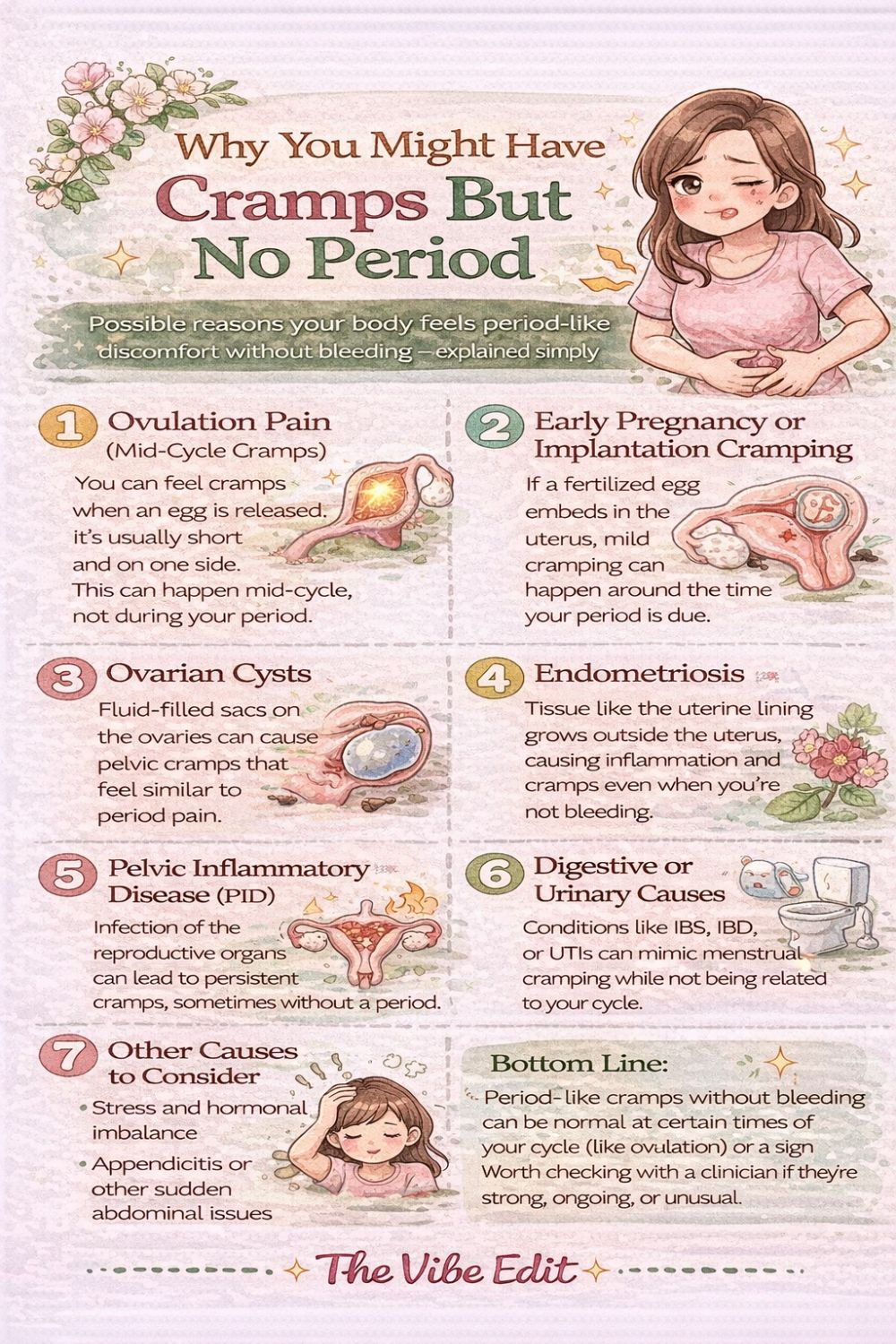
Quick Answer: Lower abdominal cramping without bleeding can result from ovulation pain, early pregnancy implantation, digestive issues like constipation or IBS, or gynecologic conditions such as ovarian cysts, endometriosis, or pelvic inflammatory disease. Take a pregnancy test after a missed period and consult a doctor for severe or persistent pain.
When I first experienced cramps but no period, I immediately thought something was wrong. But the truth is, menstrual-like pain without actual menstruation is more common than you’d think. Your uterus and surrounding organs can cramp for several reasons that have nothing to do with your monthly cycle.
The cramping sensation comes from muscle contractions in your uterus, intestines, or other pelvic organs. Sometimes it’s hormonal, sometimes it’s mechanical, and sometimes it’s completely unrelated to your reproductive system.
7 Most Common Causes of Cramps But No Period
1. Ovulation Pain (Mittelschmerz)
The first time I felt ovulation cramps, I had no idea what they were. It was a sharp, one-sided pinch that lasted maybe an hour. I later learned this is called mittelschmerz, which is German for “middle pain.”
Ovulation cramps happen when your ovary releases an egg, typically around day 14 of your cycle. About 20% of women experience this monthly. The pain occurs because the egg breaks through the ovarian wall, and sometimes a small amount of fluid or blood irritates the pelvic lining.
Here’s what mittelschmerz feels like:
- Sharp or cramping pain on one side of your lower abdomen
- Lasts from a few minutes to 24 hours
- May switch sides month to month
- Sometimes accompanied by light spotting or clear discharge
- Occurs mid-cycle, about two weeks before your expected period
I started tracking my cycle more carefully after that experience. Once I understood the pattern, I could predict when those cramps but no period would show up.
2. Early Pregnancy and Implantation Cramps
This is probably why you’re reading this article, right? I know when my cramps showed up without my period, pregnancy was my first thought too.
Implantation cramps happen when a fertilized egg attaches to your uterine lining, usually 6 to 12 days after conception. These are different from regular period cramps. They’re typically milder, shorter, and may feel like light pulling or tingling.
Signs that cramps but no period early pregnancy might be the cause:
- Mild, dull aching in your lower abdomen
- Light spotting (called implantation bleeding) that’s pink or brown
- Cramps occur about a week before your expected period
- Other early pregnancy signs like tender breasts, fatigue, or nausea
- A positive pregnancy test after your missed period
My friend experienced implantation cramps last year. She described them as gentler than period cramps and said they only lasted a day. She took a pregnancy test three days after her missed period, and it was positive.
Important timing note: Don’t test too early. hCG levels (the pregnancy hormone) need time to build up in your system. Testing before your missed period often gives false negatives.
3. Digestive Issues: IBS, Constipation, and Gas
Here’s something I didn’t realize until my doctor explained it to me: your intestines sit right next to your uterus. So sometimes what feels like cramps but no period is actually your gut acting up.
I have IBS, and I can’t tell you how many times I’ve confused digestive cramps with period cramps. They feel almost identical. The difference? Digestive cramps usually come with:
- Bloating or feeling full
- Changes in bowel movements (diarrhea or constipation)
- Relief after using the bathroom
- Gas or rumbling sounds
- Pain that moves around or changes with eating
Constipation is a huge culprit. When you’re backed up, the pressure in your intestines can create cramping that radiates to your lower abdomen. I learned to pay attention to what I eat, especially around my cycle. Too much dairy or processed food, and I’m dealing with cramps but no period causes that are entirely digestive.
If you’re dealing with digestive issues regularly, you might also want to check out foods to avoid with diverticulitis to prevent gut-related cramping and inflammation.
4. Ovarian Cysts
Last year, my roommate ended up in urgent care with severe one-sided pain. Turns out, she had an ovarian cyst that had ruptured. Scary experience, but common.
Most ovarian cysts are harmless and go away on their own. They’re fluid-filled sacs that form on your ovaries, usually during ovulation. Many women have them without knowing. But sometimes they cause:
- Dull, aching pain on one side
- Sharp, sudden pain if the cyst ruptures
- Feeling of fullness or pressure in your pelvis
- Pain during intercourse
- Cramps but no period that persist for days or weeks
Functional cysts (the most common type) typically resolve within two to three months. But if you have ovarian cyst pain that’s severe or doesn’t improve, your doctor might recommend an ultrasound to check things out.
5. Endometriosis
I need to talk about endometriosis because it’s often misdiagnosed or missed entirely. This condition affects about 10% of women of reproductive age, yet many suffer for years before getting diagnosed.
Endometriosis happens when tissue similar to your uterine lining grows outside your uterus. This tissue still responds to your hormonal cycle, causing inflammation and pain. The tricky part? Endometriosis symptoms don’t always line up with your period.
Signs of endometriosis:
- Chronic pelvic pain that may occur anytime in your cycle
- Cramps but no period that are severe and don’t respond to typical pain relief
- Pain during bowel movements or urination
- Heavy or irregular periods when they do come
- Pain during intercourse
- Difficulty getting pregnant
If you suspect endometriosis, don’t wait. I have a family member who dealt with this for three years before finally seeing a specialist. Early diagnosis and treatment make a huge difference in managing symptoms.
6. Pelvic Inflammatory Disease (PID)
Pelvic inflammatory disease is a bacterial infection of your reproductive organs. It’s usually caused by sexually transmitted infections like chlamydia or gonorrhea that go untreated.
PID symptoms include:
- Lower abdominal pain and cramping
- Unusual vaginal discharge with odor
- Pain during intercourse
- Fever and chills
- Painful urination
- Bleeding between periods
This is serious and needs immediate treatment with antibiotics. If you have cramps but no period along with fever or unusual discharge, see a doctor right away. Untreated PID can lead to chronic pain and fertility problems.
7. Other Medical Conditions
Sometimes cramps but no period causes are completely unrelated to your reproductive system:
- Appendicitis: Sharp pain in the lower right abdomen with fever and nausea
- Urinary tract infection: Cramping with burning during urination
- Stress: Can actually cause physical cramping and delay your period
- Certain medications or contraception changes
How to Tell the Difference: Ovulation vs Implantation vs Period Cramps
I started keeping a simple journal on my phone. Every time I felt cramps but no period, I’d note:
- What day of my cycle it was
- Where exactly the pain was (left, right, or center)
- How long it lasted
- Any other symptoms
After three months, patterns emerged. I could actually predict my ovulation pain and distinguish it from other types of cramping. This simple tracking helped me understand my body so much better.
When to Worry: Red Flags and Immediate Next Steps
Most cramps but no period are harmless. But sometimes, they signal something urgent. Here’s what sent my roommate to the ER, and what you should watch for:
Go to the emergency room immediately if you experience:
- Severe, sudden pain that makes you double over
- Pain on one side that’s getting worse (could be ectopic pregnancy or ovarian torsion)
- Fainting, dizziness, or feeling like you might pass out
- Fever above 100.4°F with pelvic pain
- Heavy bleeding that soaks through a pad in an hour
- Vomiting that won’t stop
- Pain with shoulder pain (sign of internal bleeding)
Schedule a doctor’s appointment within a few days if:
- Cramps persist for more than a week
- Pain interferes with daily activities
- You have a missed period and negative pregnancy test
- You notice unusual vaginal discharge
- Pain during intercourse
Trust your instincts. I’ve learned that if something feels seriously wrong, it probably needs medical attention. Don’t brush off severe pain or talk yourself out of getting help.
Tests and Diagnosis: What a Clinician Will Do
When I finally went to see my doctor about recurring cramps but no period, here’s what happened:
First, she asked detailed questions about my symptoms, cycle, and medical history. Then she performed a pelvic exam to check for tenderness, masses, or inflammation.
Common diagnostic tests include:
- Urine pregnancy test: Rules out pregnancy as a cause
- Ultrasound: Visualizes your ovaries, uterus, and surrounding structures to check for cysts, fibroids, or other abnormalities
- Blood work: Checks for infection, hormone levels, or inflammation markers
- STI testing: Rules out infections that could cause PID
- Laparoscopy: In some cases, minimally invasive surgery to diagnose endometriosis
My doctor found a small functional cyst on my left ovary, which explained my one-sided ovarian cyst pain. She reassured me it would likely resolve on its own, and it did within two months.
Treatment and At-Home Relief
While you’re figuring out the cause of your cramps but no period, here’s what actually helps with the pain:
Immediate relief strategies:
- Heat pad or hot water bottle on your lower abdomen (my absolute go-to)
- Over-the-counter ibuprofen or naproxen for inflammation
- Gentle yoga or stretching to relax pelvic muscles
- Warm bath with Epsom salts
- Light walking or movement (sounds counterintuitive, but it helps)
For digestive-related cramps:
- Increase fiber intake gradually
- Stay hydrated (at least 8 glasses of water daily)
- Stool softener if you’re dealing with constipation
- Probiotic supplements for IBS symptoms
- Avoid trigger foods (for me, it’s dairy and fried foods)
Speaking of natural remedies, I’ve also found that clove water benefits include reducing inflammation and cramping. It’s become part of my self-care routine during uncomfortable days.
Hormonal options (discuss with your doctor):
- Birth control pills to regulate your cycle and reduce ovulation cramps
- Hormonal IUD for heavy or painful periods
- Contraception options that suppress ovulation entirely
I started using a heating pad and switched to an anti-inflammatory diet. The combination reduced my cramping by at least 60%. Small changes really do add up.
Prevention and When to See a Specialist
If you’re dealing with chronic cramps but no period, it might be time to see a specialist. I waited too long to get proper help, thinking my pain was “normal.”
Consider seeing a gynecologist if:
- You have cramps but no period every month that impact your quality of life
- Over-the-counter pain relief doesn’t help
- You suspect endometriosis or PCOS
- You’ve been trying to conceive without success
- Your symptoms are getting worse over time
For endometriosis specifically, a gynecologist or reproductive endocrinologist can offer treatments like hormonal therapy, surgery, or fertility support if needed.
Managing chronic health conditions while working from home can be challenging. I’ve learned that creating a comfortable workspace with proper ergonomic workstation setup helps me manage pain better during flare-ups.
Frequently Asked Questions
Q1. Can cramps but no period mean I’m pregnant?
Yes, mild cramping (often with light spotting called implantation bleeding) can indicate early pregnancy. However, the only reliable way to know is to wait until your missed period and take a home pregnancy test. Testing too early often results in false negatives because hCG levels haven’t built up enough yet.
Q2. How soon after conception do implantation cramps happen?
Implantation cramps typically occur 6 to 12 days after fertilization. They’re usually short-lived (lasting hours to a day) and milder than regular period cramps. Many women don’t feel them at all.
Q3. When is cramping an emergency?
Seek immediate emergency care if you experience severe one-sided pain, fainting, high fever, heavy bleeding, dizziness, or vomiting. These could indicate serious conditions like ectopic pregnancy, ovarian torsion, or appendicitis that require urgent treatment.
Q4. Could digestion cause cramps without a period?
Absolutely. Constipation, gas, IBS, and inflammatory bowel disease can all cause cramping that feels identical to menstrual cramps. If your pain improves after bowel movements or comes with bloating and digestive changes, your gut is likely the culprit. Treating digestive issues often resolves the cramping.
Q5. Will birth control stop cramps between periods?
Hormonal contraception suppresses ovulation, which can significantly reduce or eliminate ovulation cramps. Many women also experience lighter, less painful periods overall. Discuss birth control options with your doctor to find what works best for your situation.
Two Quick Tips That Changed Everything for Me
Tip 1: Track your timing religiously
I can’t stress this enough. Note the cycle day when cramps occur, whether the pain is one-sided or central, and any accompanying symptoms like spotting or discharge. After just two months of tracking, I could distinguish between ovulation pain, digestive issues, and other causes. This information also helps your doctor make an accurate diagnosis.
Tip 2: Wait to test
I wasted so much money on early pregnancy tests that came back negative. Here’s the truth: testing before your missed period rarely works. The hCG hormone needs time to build up in your system. Save yourself the stress and money by waiting until at least the first day of your missed period for the most accurate results.
Bottom Line: Listen to Your Body
Cramps but no period can be confusing and sometimes scary. I’ve been there, stressing over every twinge and symptom. But most of the time, these cramps are completely normal parts of your menstrual cycle or temporary issues that resolve on their own.
That said, you know your body best. If something feels seriously wrong, if pain is severe or persistent, or if you’re worried about pregnancy, don’t hesitate to seek medical care. I waited months before seeing my doctor, and I wish I’d gone sooner.
The key is understanding the patterns, tracking your symptoms, and knowing when to take action. Whether it’s ovulation cramps, implantation, digestive issues, or something else, identifying the cause helps you find relief and peace of mind.
Take care of yourself. Your body is communicating with you through these symptoms. Learning to listen and respond appropriately is one of the best things you can do for your health.