

I’ll never forget the first time I woke up with my hands shaking uncontrollably. I was staying at my grandparents’ house, and honestly, it scared me. My heart was racing, my fingers wouldn’t stop trembling, and I had no idea what was happening to my body. I rushed to the kitchen where my grandmother was making chai, and she immediately sat me down with a glass of water and some dates. Within minutes, I felt better.
That morning changed how I understood my body. My grandmother pulled out her old notebook where she’d been tracking health patterns for years, and she showed me something interesting. She’d documented similar episodes in my grandfather when he was managing his diabetes, and over time, she’d figured out the common triggers.
Waking up trembling is commonly caused by low blood sugar, anxiety or panic, sleep disruptions, dehydration or medication side effects. Check blood sugar first if you’re diabetic. If shaking is frequent, worsening, or paired with chest pain, get urgent medical evaluation.
Let me share what I’ve learned from both personal experience and my grandmother’s careful observations over the years.
What’s Actually Happening When You Wake Up Shaking
Your body is trying to tell you something. Trembling on waking isn’t random. It’s your system responding to an imbalance or stress that built up overnight.
Think about it: you’ve been fasting for 8-10 hours, your body’s been processing everything from dinner, your stress hormones have been fluctuating, and your muscles have been still for hours. When you wake up, all these factors can create the perfect storm for morning tremors.
The good news? Most causes are fixable once you identify them.
Quick Self-Check: What to Do Right Now
Before you panic (which, trust me, only makes the shaking worse), try these immediate steps:
- Check your blood sugar if you have a glucose monitor. My grandfather keeps his right on the bedside table for this exact reason.
- Drink a full glass of water slowly. Dehydration overnight is more common than you think, especially if you had coffee or tea late in the evening.
- Sit up slowly and breathe. Sometimes orthostatic hypotension (blood pressure dropping when you stand) can trigger shakiness.
- Eat something with protein and carbs. My grandmother swears by a handful of almonds and a banana, or some dates with milk.
- Note any other symptoms. Are you sweating? Confused? Having chest discomfort? These details matter.
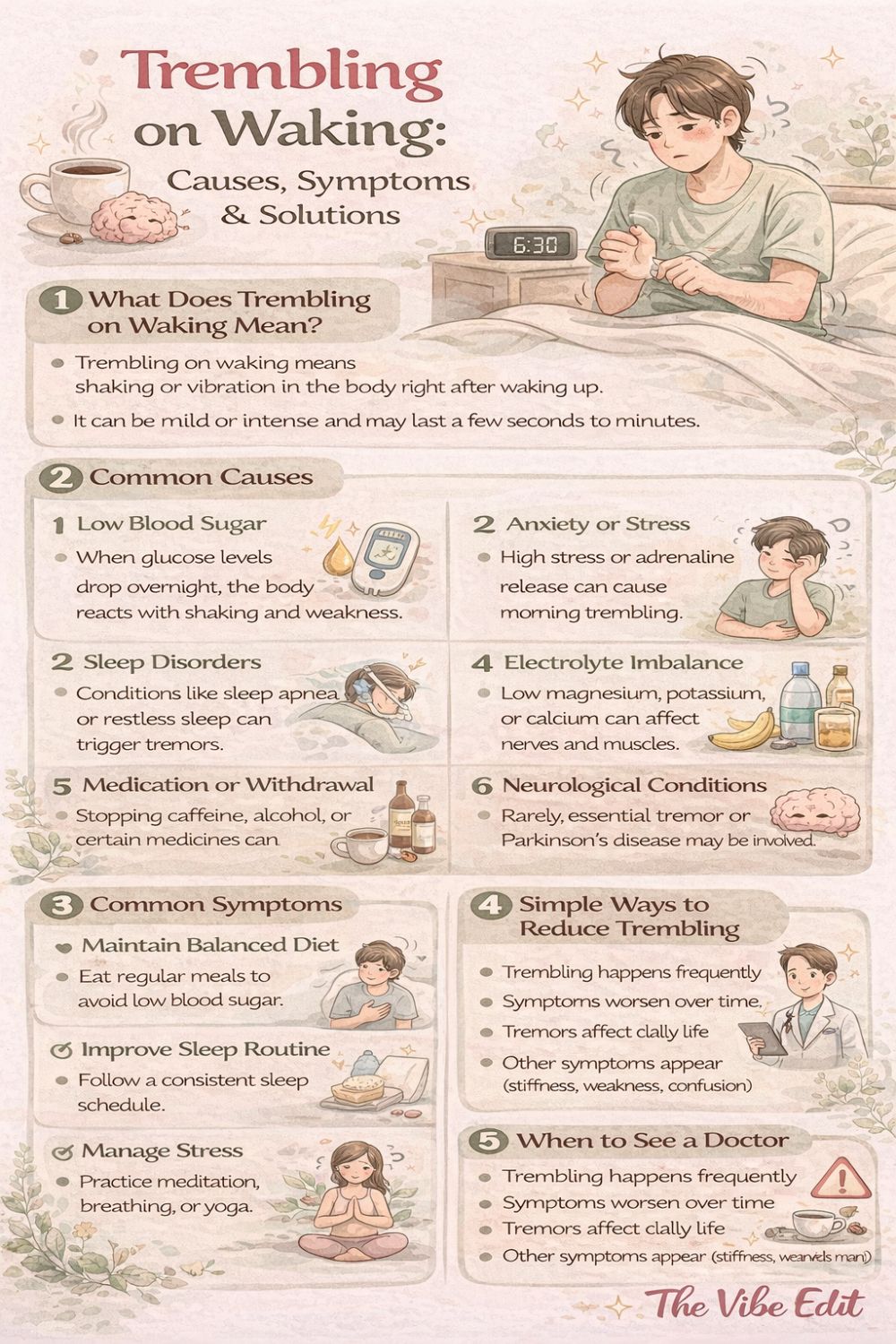
Common Causes of Waking Up Shaking
Hypoglycemia: When Blood Sugar Drops Too Low
This was my issue that morning at my grandparents’ house. I’d skipped dinner the night before because I wasn’t hungry, and my body literally ran out of fuel overnight.
Hypoglycemia doesn’t just affect people with diabetes. Anyone can experience low blood sugar, especially if you:
- Skip meals or eat very late
- Exercise heavily without eating enough
- Drink alcohol on an empty stomach
- Follow extreme diets
The shaky when waking up feeling from low blood sugar usually comes with sweating, confusion, rapid heartbeat, and intense hunger. Your body releases adrenaline to raise blood sugar, which causes the trembling.
What helps: Keep something with quick-acting carbs near your bed. My grandmother prepared small containers of raisins and almonds that my grandfather could grab immediately. Within 15 minutes of eating, the shaking should ease.
Anxiety and Panic: The Cortisol Surge
Here’s something I didn’t know until recently: anxiety can spike hardest in the early morning hours. Your body naturally produces more cortisol and adrenaline between 4-8 AM to wake you up. For some people, this normal surge goes overboard.
I went through a stressful period at work where I’d wake up around 5 AM with my heart pounding and hands shaking. No low blood sugar, no other symptoms. Just pure panic that seemed to come from nowhere.
Anxiety attacks or panic on waking can cause:
- Trembling hands and legs
- Rapid breathing
- Tight chest
- Racing thoughts
- Feeling like something bad is about to happen
What helps: I started keeping a journal by my bed to write down worries before sleep. Deep breathing exercises the moment I wake up also help reset my nervous system. Sometimes just acknowledging “this is anxiety, not danger” makes the trembling stop faster.
Sleep Disorders: When Poor Sleep Creates Morning Problems
My uncle struggled with sleep apnea for years before getting diagnosed. He’d wake up exhausted and shaky because his body had been fighting for oxygen all night.
Sleep disorder issues like sleep apnea or restless leg syndrome don’t just make you tired. They trigger stress responses that can leave you trembling on waking. Your body has been in survival mode all night, flooding with stress hormones.
Signs your sleep quality might be the culprit:
- You snore loudly or gasp during sleep
- You feel exhausted even after 8 hours
- Your partner notices you stop breathing briefly
- You have frequent leg movements at night
What helps: A sleep study can identify problems. My uncle now uses a CPAP machine and hasn’t had shaky when waking up episodes since. Better sleep position and avoiding late meals also improved his mornings.
Dehydration and Electrolyte Imbalance
This one surprised me. I thought drinking water during the day was enough, but if you’re not hydrating properly before bed, you can wake up seriously depleted.
Dehydration and electrolyte imbalance cause tremors upon waking because your muscles and nerves need proper hydration and minerals to function. When sodium, potassium, or magnesium levels drop, trembling can start.
You’re more likely to wake up dehydrated if you:
- Drink several cups of chai or coffee daily (they’re diuretics)
- Had alcohol the night before
- Sweat a lot at night
- Take certain medications
What helps: I keep a water bottle by my bed and drink a glass before sleeping. My grandmother makes a mixture with a pinch of pink salt and lemon in water, which helps restore electrolytes naturally. Coconut water in the morning works wonders too.
Medication Side Effects
Certain medications can cause waking up shaking causes that aren’t immediately obvious. Stimulants, some antidepressants, asthma inhalers, and even thyroid medications can trigger morning trembling, especially when taken at specific times.
What helps: Don’t stop medications without talking to your doctor, but do mention the shaking. Timing adjustments or dosage changes often solve the problem.
When Trembling Suggests Something Neurological
Most morning shaking is temporary and fixable. But sometimes tremors upon waking point to neurological conditions that need medical attention.
Essential Tremor
Essential tremor is a movement disorder that often worsens with action and can be more noticeable when you first wake up. Unlike Parkinson’s, it usually affects both sides of the body and improves with rest.
My neighbor has essential tremor. She noticed it first as slight hand shaking when reaching for her morning cup. It runs in families and usually starts gradually.
Parkinson’s Disease
Parkinson disease typically causes tremors that are more prominent at rest and may be worse on one side. Morning stiffness combined with trembling, especially if you’re over 60, deserves a neurologist’s evaluation.
Myoclonus
Myoclonus refers to sudden, brief muscle jerks. Some people experience this as they’re falling asleep or waking up. It’s usually harmless but can be startling.
When to worry: If tremors are rhythmic, progressive, affect your ability to function, or come with other neurological symptoms like balance problems or coordination loss, see a doctor promptly.
What Your Doctor Will Ask
When I finally went to my doctor about occasional morning shaking, she asked specific questions that helped narrow down the cause:
- Timing: Exactly when does it happen? Right upon waking or after standing?
- Duration: How long does it last? Minutes or hours?
- Triggers: Any pattern with food, stress, sleep, or medications?
- Other symptoms: Sweating, weakness, confusion, chest discomfort?
- Family history: Anyone else with tremors, diabetes, thyroid issues, or neurological conditions?
She ordered simple blood tests checking glucose, thyroid function, electrolytes, and vitamin levels. For some people, additional testing like a sleep study or neurological exam might be needed.
Home Care and Prevention Strategies
Based on what I’ve learned and what works in my family:
- Create a bedtime eating routine. A small snack with protein and complex carbs before bed prevents overnight blood sugar drops. My grandmother’s favorite: warm milk with a few almonds and dates.
- Track your patterns. I keep notes on my phone about when shaking happens, what I ate, how I slept, and my stress level. Patterns emerge quickly.
- Manage stress actively. Meditation, evening walks, or even just 10 minutes of reading before bed helps keep morning anxiety under control.
- Stay hydrated properly. Not just water, but also foods with high water content throughout the day. Cucumber, oranges, and coconut water are staples in our house.
- Improve sleep hygiene. Cool room, dark environment, consistent schedule. These aren’t just nice ideas, they actually reduce morning trembling episodes.
- Check medication timing. If you take morning medications, ask your doctor if evening timing might work better.
Red Flags: When to Seek Immediate Care
Please don’t ignore these warning signs. Go to the emergency room or call for help if trembling on waking comes with:
- Chest pain or pressure
- Severe confusion or inability to think clearly
- Fainting or near-fainting
- Difficulty breathing
- Severe weakness or numbness
- Slurred speech or vision changes
- Blood sugar below 70 mg/dL that won’t rise with food
These could indicate serious conditions like heart problems, stroke, or severe hypoglycemia needing urgent treatment.
Frequently Asked Questions
Why do I shake when I wake up?
Often it’s low blood sugar from overnight fasting, anxiety from morning cortisol surges, poor sleep quality, dehydration, or medication side effects. Check blood sugar and hydration first, then look at sleep and stress patterns.
Is shaking on waking ever an emergency?
Yes. If shaking comes with chest pain, fainting, severe confusion, or breathing trouble, seek immediate care. These symptoms could indicate cardiac or neurological emergencies.
Can anxiety cause trembling only in the morning?
Absolutely. Overnight cortisol and adrenaline surges peak in early morning hours. Nocturnal panic attacks can also happen during sleep transitions, leaving you shaky on waking even if you don’t remember the panic episode.
Could low blood sugar be the reason if I don’t have diabetes?
Yes. Long fasting periods, alcohol consumption, extreme dieting, or intense exercise without adequate food can all lower glucose levels in people without diabetes, causing morning shakiness.
When should I see a neurologist?
If tremors are persistent, worsening over time, rhythmic in pattern, or accompanied by coordination loss, muscle stiffness, or other neurological signs, ask your primary doctor for a neurologist referral.
Two Quick Tips from Experience
- Keep a morning emergency kit by your bed with glucose tablets or dates, water, and a simple protein snack. Check with your doctor about what works for your situation, but having quick access prevents panic.
- Track episodes systematically. Note the time, what you ate the day before, sleep quality, recent stress, and any other symptoms. This documentation helps diagnosis tremendously and speeds up getting the right treatment.
Moving Forward
That morning at my grandparents’ house taught me to listen to my body’s signals. Waking up shaking causes aren’t usually mysterious once you pay attention to patterns. My grandmother’s notebook method of tracking symptoms and triggers turned out to be smarter than I ever gave her credit for.
Most cases of morning trembling resolve once you identify and address the root cause. Better nutrition timing, stress management, proper hydration, and good sleep make an enormous difference. But don’t hesitate to get medical evaluation if shaking persists or worsens.
Your body is communicating. The trembling is a message, not a mystery. With some detective work and proper care, those shaky when waking up mornings can become rare exceptions rather than daily occurrences.
Download a simple tracking sheet to monitor your episodes, or start a basic journal noting patterns. Small changes in routine often bring big improvements in how you feel each morning.














One Response