
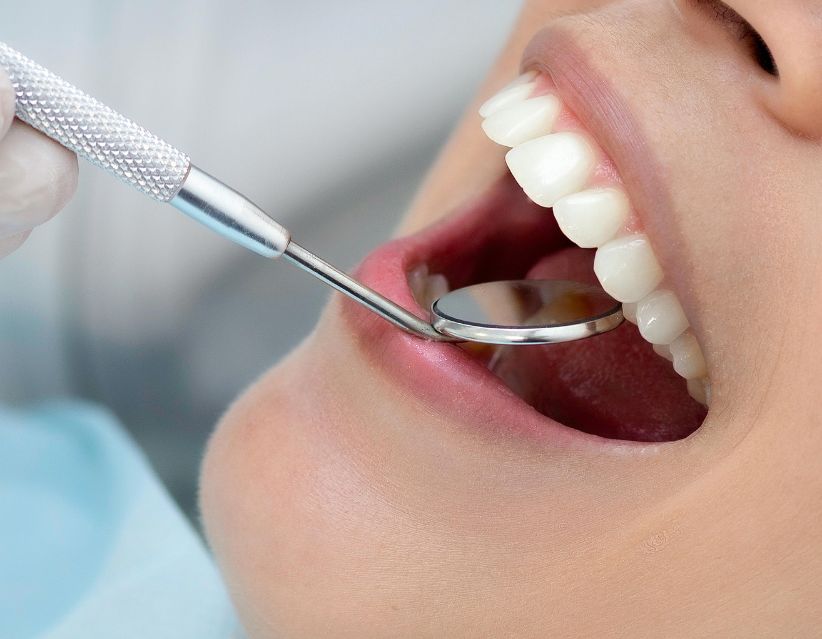
Last month, I noticed something weird while getting ready for a family wedding. There were these chalky white spots on teeth staring back at me in the mirror. I panicked. Were my teeth rotting? Was it permanent? I immediately texted my dentist friend (thank goodness for that connection), and what she told me completely changed how I understood dental health.
Turns out, those white bits on teeth are way more common than I thought. My grandfather actually had similar spots for years, and my grandmother kept detailed notes about everything related to family health in her old journals. When I dug through them, I found pages about tooth care, home remedies, and observations she’d made over decades. That research, combined with my own experience and what dental professionals have taught me, is what I want to share with you today.
What Are White Bits on Teeth?
Those strange white spots on teeth aren’t just cosmetic annoyances. They’re actually your teeth sending you signals. Think of them as tiny warning lights on your dashboard, except instead of checking your oil, you need to check your oral health routine.
White bits on teeth typically show up as:
- Chalky, opaque patches that look different from your normal tooth color
- Small dots or larger irregular shapes
- Streaks that run horizontally across teeth
- Rough-textured areas that feel different when you run your tongue over them
I remember touching mine obsessively with my tongue for days. They felt slightly rougher than the rest of my tooth surface, almost like someone had painted a thin layer of chalk on my teeth.
The appearance varies depending on what’s causing them. Some spots are barely visible unless you’re really looking, while others stand out clearly. Mine were pretty noticeable on my front teeth, which made me super self-conscious about smiling in photos.
What Causes White Spots on Teeth?
Understanding what causes white spots on teeth helped me stop freaking out and start taking action. Here’s what I learned from my research and conversations with dental professionals.
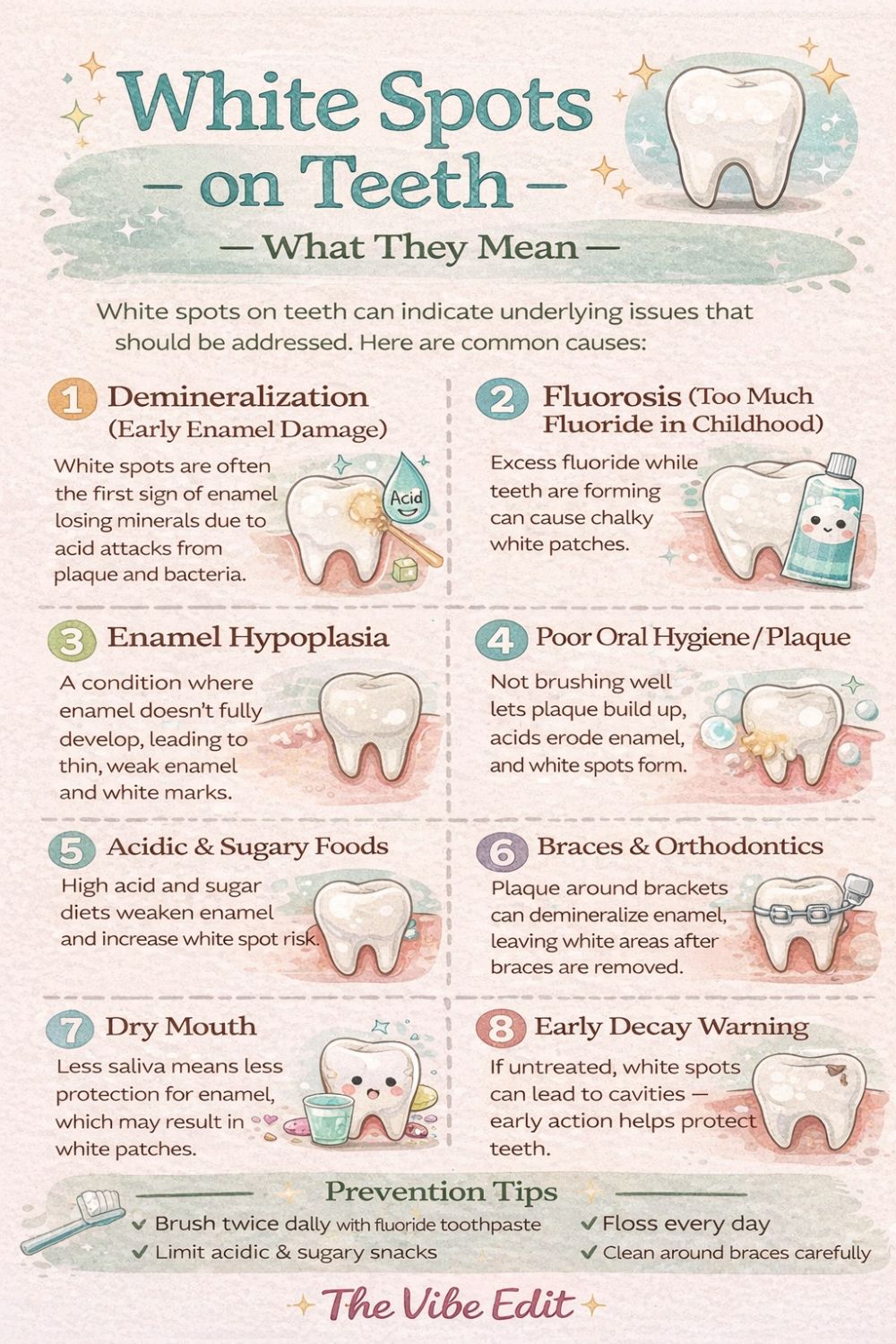
Enamel Demineralization and Decalcification
This was my problem. Enamel demineralization happens when acids from bacteria strip away minerals from your tooth surface. Basically, plaque buildup creates acid, and that acid eats away at your enamel’s mineral content.
I realized I’d been slacking on my oral hygiene during exam season. Late night study sessions meant sugary coffee, quick snacks, and sometimes forgetting to brush properly before crashing into bed. My teeth were literally showing the consequences.
Decalcification is just another word for this process. When calcium and phosphate leave your enamel, you’re left with these white, weakened spots. They’re actually the first stage of cavity formation. Catching them early (like I did) means you can potentially reverse the damage.
Dental Fluorosis
My cousin has this. Dental fluorosis happens when you get too much fluoride during childhood while your teeth are still forming. It creates permanent white spots on teeth that range from barely noticeable streaks to more obvious patches.
The thing about fluorosis is that it only occurs when adult teeth are developing, usually before age eight. So if you’re an adult just now noticing spots, this probably isn’t your issue (unless you’ve had them since childhood and just never paid attention).
Enamel Hypoplasia
Enamel hypoplasia sounds scary, but it just means your enamel didn’t develop properly. This can happen from:
- Nutritional deficiencies during tooth development
- Childhood illnesses or high fevers
- Premature birth
- Certain medications taken by pregnant mothers
My grandmother’s journals mentioned that one of my uncles had weak enamel from a severe illness he had as a baby. His teeth always had these white patches that never went away, no matter how well he brushed.
Poor Oral Hygiene and Diet
Let’s be honest. Sometimes we’re just not taking care of our teeth properly. Eating too many acidic or sugary foods, not brushing twice daily, skipping floss (guilty!), all of this contributes to enamel demineralization.
I used to drink lemon water every morning thinking it was healthy. Nobody told me I should rinse with plain water afterward to neutralize the acid. Those daily acid baths were slowly stripping my enamel.
White Spots After Braces
This deserves special attention because it’s so common. White spots on teeth after braces happen when you don’t clean around brackets properly. Plaque and tartar build up in those hard-to-reach spots, creating permanent white scars.
My friend got her braces off last year and cried when she saw white squares outlined exactly where her brackets had been. Years of orthodontic treatment, and now she had these permanent reminders. Her orthodontist should have emphasized better orthodontic hygiene practices.
How Dentists Diagnose White Spots
When I finally went to see a dentist about my spots, I expected some complicated procedure. Instead, diagnosis was pretty straightforward.
Visual Examination
The dentist looked at my teeth under good lighting and immediately identified my spots as early decalcification. She could tell from the texture, location, and appearance that they were from recent poor hygiene rather than something developmental.
Advanced Tools
For unclear cases, dentists might use:
- Transillumination: Shining light through the tooth to see how dense different areas are. Demineralized spots show up differently than healthy enamel.
- DIAGNOdent: A laser device that measures tooth substance. It can detect early decay before it’s visible to the naked eye.
- Bitewing X-rays: These show the health of enamel and can reveal deeper issues beneath surface spots.
My dentist didn’t need these fancy tools for my case, but she explained that they help differentiate between fluorosis, hypoplasia, and active demineralization.
White Spots on Teeth Treatment Options
Here’s where things got interesting. My dentist explained that how to remove white spots from teeth depends entirely on what caused them and how severe they are.
Remineralization (What I Did)
Since I caught my demineralization early, I could actually reverse it through remineralization. This is basically feeding your enamel the minerals it lost.
My treatment plan included:
- Professional Fluoride Varnish: My dentist applied concentrated fluoride varnish at the office. It’s way stronger than regular toothpaste and helps drive minerals back into weakened enamel.
- Prescription Remineralizing Paste: I got a special toothpaste with extra calcium and phosphate. I had to use it every night before bed and leave it on my teeth without rinsing.
- Better Oral Care: Obviously, I needed to fix my habits. Proper brushing twice daily, flossing (for real this time), and cutting back on acidic drinks.
- After three months, my spots had faded significantly. They’re not completely invisible, but they’re way less noticeable. My dentist says with continued care, they might disappear entirely.
Resin Infiltration
For spots that won’t respond to remineralization, dentists can use resin infiltration. This technique fills the porous areas of demineralized enamel with a liquid resin that matches your tooth color.
The resin seeps into the white spot and hardens, making it blend with the surrounding tooth. It’s minimally invasive and works well for moderate spots.
Microabrasion
Microabrasion involves gently removing a thin layer of enamel to eliminate surface staining and shallow white spots. The dentist uses a mild acid and abrasive compound to polish away the discolored layer.
This works best for fluorosis spots and superficial demineralization. The downside is you’re permanently removing some enamel, though usually only a tiny amount.
Dental Bonding
Bonding means applying tooth-colored resin directly over the white spot. The dentist shapes and polishes it to match your natural teeth. It’s quick, affordable, and immediately makes spots disappear.
My cousin with fluorosis got bonding on her front teeth. You honestly can’t tell she ever had spots. The bonding typically lasts 5-10 years before needing replacement.
Veneers
Veneers are thin shells of porcelain that cover the entire front surface of your tooth. They’re the most expensive option but give perfect results for severe spots that won’t respond to other white spots on teeth treatment methods.
This is overkill for most cases, but if you have multiple aesthetic concerns (shape, color, spacing) along with white spots, veneers might make sense.
Prevention: Stop White Spots Before They Start
After dealing with this myself, I’m obsessed with prevention. Here’s my current routine, based on what worked for me and advice from dental professionals.
Daily Oral Hygiene
I brush twice daily with fluoride toothpaste, spending a full two minutes each time. I set a timer because I used to rush through it. I also actually floss now, every single night. Getting plaque out from between teeth is crucial for preventing demineralization.
Smart Fluoride Use
I use fluoride toothpaste and drink fluoridated tap water, which helps with remineralization. However, for young children, parents need to monitor fluoride intake to prevent fluorosis. Use only a rice-grain sized amount of toothpaste for kids under three, and a pea-sized amount for older children.
Diet Modifications
I still have my morning drink, but now it’s regular water or milk instead of lemon water. When I do have something acidic or sugary, I rinse my mouth with plain water immediately after.
I also wait 30 minutes before brushing after eating acidic foods. This was new information for me! Brushing right after can actually damage already-softened enamel.
For Braces Wearers
If you have braces, orthodontic hygiene is critical. Use a special orthodontic toothbrush or electric brush to clean around brackets. Floss threaders or water flossers help clean between wires. Your orthodontist might also recommend extra fluoride rinses to prevent white spot lesions.
My friend who ended up with spots after braces wishes she’d known this earlier. Prevention is so much easier than trying to fix permanent damage.
Special Cases: Children and Braces
Fluorosis in Children
Parents need to supervise tooth brushing in young children to prevent dental fluorosis. Too much fluoride during tooth development creates those permanent white streaks.
My grandmother’s notes mentioned being careful with well water, which sometimes has naturally high fluoride levels. If you’re unsure about your water’s fluoride content, you can have it tested.
Orthodontic Patients
Getting braces is exciting, but it comes with responsibility. The brackets and wires create perfect hiding spots for plaque and food particles. Without excellent cleaning, demineralization happens fast, leaving permanent white spots on teeth after braces.
Prevention strategies include:
- Brushing after every meal
- Using fluoride mouth rinses daily
- Having professional cleanings more frequently
- Avoiding sticky, sugary foods
- Attending all scheduled orthodontist appointments
Some orthodontists apply protective sealants or fluoride varnish around brackets to reduce risk. Ask about these options if you’re starting treatment.
When to See a Dentist
I waited too long to address my spots because I kept thinking they’d go away on their own. Don’t make my mistake.
See a dentist if:
- You notice new white spots appearing
- Existing spots are growing or changing color
- You experience tooth sensitivity or pain
- Spots developed after getting braces removed
- You’re unsure whether spots are serious
Early intervention makes a huge difference. My spots were reversible because I caught them relatively early. Waiting longer might have meant permanent damage requiring more invasive treatments.
FAQs About White Bits on Teeth
Are white spots permanent?
Sometimes yes, sometimes no. Mild demineralization can be reversed with remineralization treatments like fluoride varnish and improved oral care. However, deep enamel defects from fluorosis or enamel hypoplasia are permanent and need cosmetic dental treatment like bonding or veneers if you want them removed.
Do whitening treatments remove white spots?
No, and they might actually make things worse. Teeth whitening lightens your entire tooth, but white spots don’t lighten further because they’re already lighter than healthy enamel. This can make the contrast more obvious. For white spots, consider resin infiltration, microabrasion, or bonding instead of whitening.
Can fluoride toothpaste cause white spots?
Regular use of fluoride toothpaste won’t cause white spots in adults. However, overexposure to fluoride in young children during tooth development can cause fluorosis. This is why pediatric dentists recommend using only a tiny amount of toothpaste for kids and supervising brushing to make sure they don’t swallow it.
Will braces cause white spots?
Braces themselves don’t cause white spots, but poor hygiene during orthodontic treatment commonly leads to white spot lesions from demineralization. The brackets make cleaning harder, and plaque buildup around them creates acid that damages enamel. Preventive fluoride treatments and excellent orthodontic hygiene reduce this risk significantly.
When should I see a dentist?
Book an appointment if spots change color, cause sensitivity, expand in size, or if you’re unsure of the cause. Even if spots seem minor, getting a professional diagnosis helps you understand whether they’re reversible or need treatment. Early detection of decalcification means better chances of successful remineralization.
Two Quick Tips for Healthy Enamel
Tip 1: After eating acidic or sugary snacks, rinse your mouth with plain water and wait 30 minutes before brushing. This neutralizes acid and gives your enamel time to reharden. Brushing immediately after acid exposure can actually scrub away softened enamel.
Tip 2: If your dentist recommends fluoride varnish or a prescribed remineralizing paste, use it exactly as directed. These professional treatments are significantly more effective than over-the-counter products. Consistency is key for seeing results with remineralization.
Taking Action on White Spots
Dealing with white bits on teeth taught me that our teeth are constantly communicating with us. Those spots were my teeth telling me I needed to step up my care routine. Listening to that message and taking action saved me from more serious problems down the road.
Whether your spots are from recent demineralization, childhood fluorosis, or white spots after braces, there are solutions available. The key is getting a proper diagnosis and starting treatment sooner rather than later.
I’m happy to say my teeth look so much better now. Every time I smile in photos, I’m reminded that taking care of the problem was worth it. Your teeth are with you for life, so they deserve proper attention and care.
If you’re seeing white spots in the mirror like I was, don’t ignore them. Book that dentist appointment, get a professional opinion, and start your journey to healthier, more confident smiles. Your future self will thank you.














One Response