
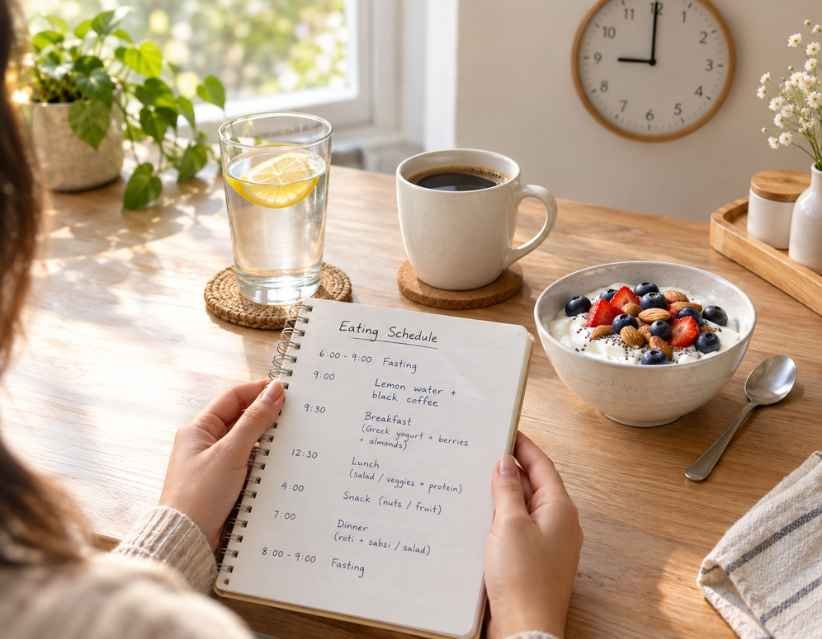
I wrote this guide because three friends asked me how to intermittent fast in the same week, and I kept sending them long voice notes. This is the cleaner version, with the schedules, drinks and vegetarian meals I wish I had known on day one.
Quick note before we start: I am not a doctor. This is what I learned from my own trial and error and from reading guidance published by Mayo Clinic, Johns Hopkins Medicine, Cleveland Clinic, Harvard Health and the NIH.
How to Intermittent Fast: The Quick Answer
Here is the short version if you want it before the story.
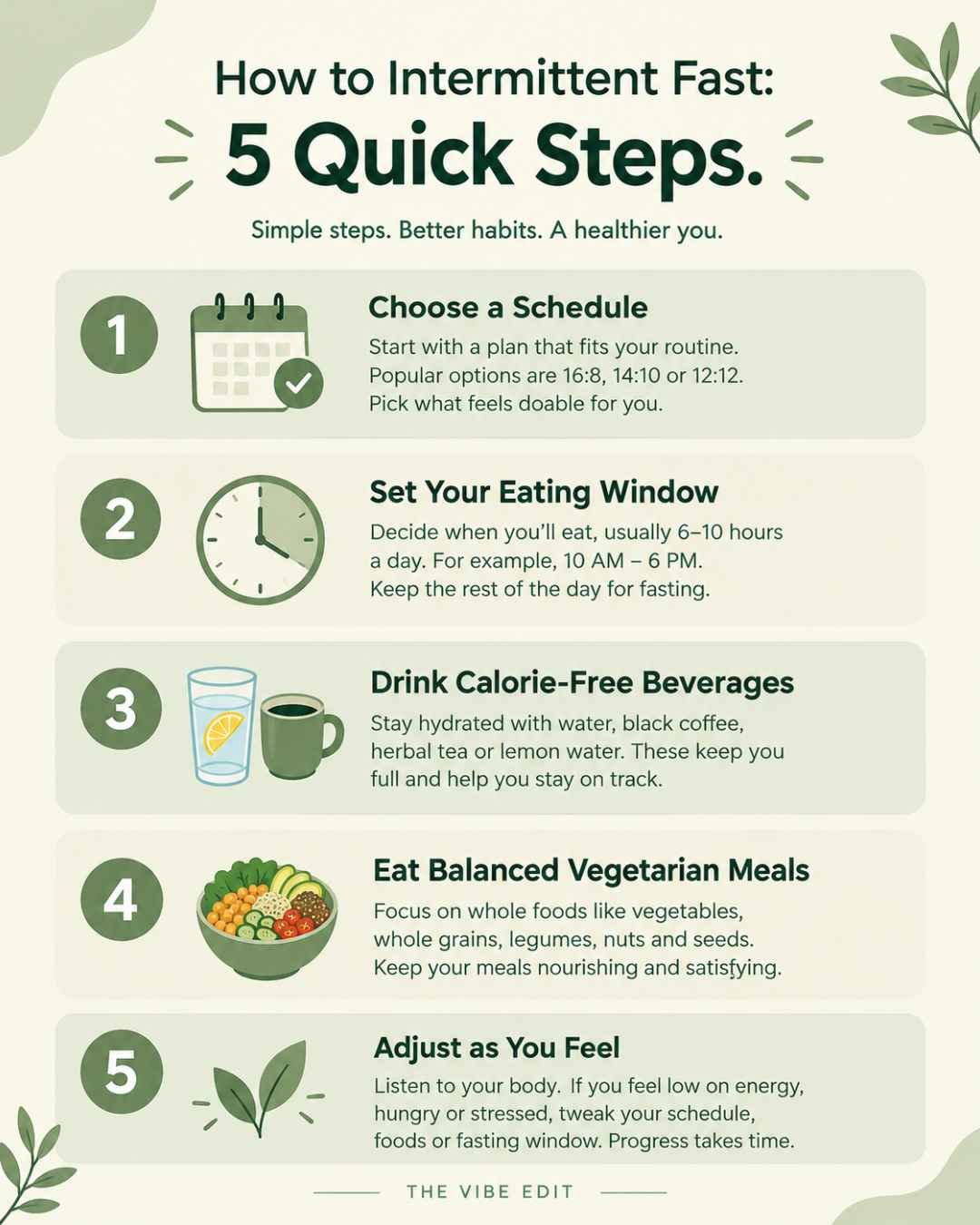
- Pick a daily eating window, such as 10 hours.
- Fast for the remaining hours, starting with 14:10 before trying 16:8.
- Drink water, plain tea and black coffee during the fasting window.
- Fill your eating window with balanced meals that include protein, fiber and vegetables.
- Stay consistent and adjust based on how you feel.
The rest of this post explains each step in plain language.
What Is Intermittent Fasting?
Intermittent fasting is an eating pattern that cycles between fasting periods and eating periods. It focuses on when you eat, not on a long list of banned foods.
Most beginners use a daily version called time-restricted eating. You eat all your meals inside a set number of hours and stop eating for the rest of the day.
Fasting Window vs. Eating Window
Your fasting window is the stretch of time when you have no calories. Your eating window is the stretch when you eat your meals and snacks.
If you finish dinner at 7 PM and eat breakfast at 9 AM, you have fasted for 14 hours. You already do a version of this every night while you sleep.
Fasting vs. Starvation
Fasting by choice for a few hours is not starvation. You still eat full, nourishing meals every day. You are simply giving your digestion a longer break between them.
Why I Started Looking Into This
My grandfather has type 2 diabetes. Our family keeps a worn notebook where we write down his meals, his sugar readings and what his doctor says. Reading it taught me something I did not expect: timing matters as much as the food itself.
Meanwhile, my own life was a mess of late-night snacking and skipped breakfasts. I was not hungry at 11 PM. I was bored and scrolling.
So I tried a gentle eating window to see whether a routine would help. It did, but not in the way social media promised. It helped because it made me pay attention. If you want a calmer routine to go with it, my morning yoga routine for beginners pairs well with a slightly later breakfast.
How to Start Intermittent Fasting for Beginners
If you want to know how to start intermittent fasting, the secret is to go slowly. Most people quit because they begin with an extreme plan. Here is the order I followed, and it matches the beginner advice from Precision Nutrition.
Step 1: Choose Your Fasting Schedule
Look at your real week, not your ideal week. If you have early meetings and late dinners with family, a 12-hour fast is more realistic than an 18-hour one.
Step 2: Set Your Eating Window
Pick a start time and an end time. Write them on a sticky note. I used 9 AM to 7 PM at first, which gave me a 14-hour overnight fast.
Step 3: Start With a Manageable Fasting Period
Begin with 12 hours for a week. Then move to 14 hours. Only try longer fasts if you feel good and your doctor agrees it suits you.
Step 4: Stay Hydrated
Thirst often feels like hunger. Keep a water bottle near you all day, especially in the morning.
Step 5: Plan Balanced Meals
A fasting window only works if your meals are solid. We cover this in detail below.
Step 6: Keep the Routine Consistent
Consistency beats perfection. A steady 14:10 schedule five days a week is better than a heroic 20-hour fast followed by a binge.
Step 7: Adjust Based on How You Feel
Notice your energy, mood, sleep and appetite. If you feel dizzy, shaky or irritable, shorten the fast and eat. Your body is giving you information.
Which Intermittent Fasting Schedule Is Best for Beginners?
No single intermittent fasting schedule is best for everyone. Johns Hopkins and Mayo Clinic both describe several patterns, and the right one depends on your health, your job and your sleep.
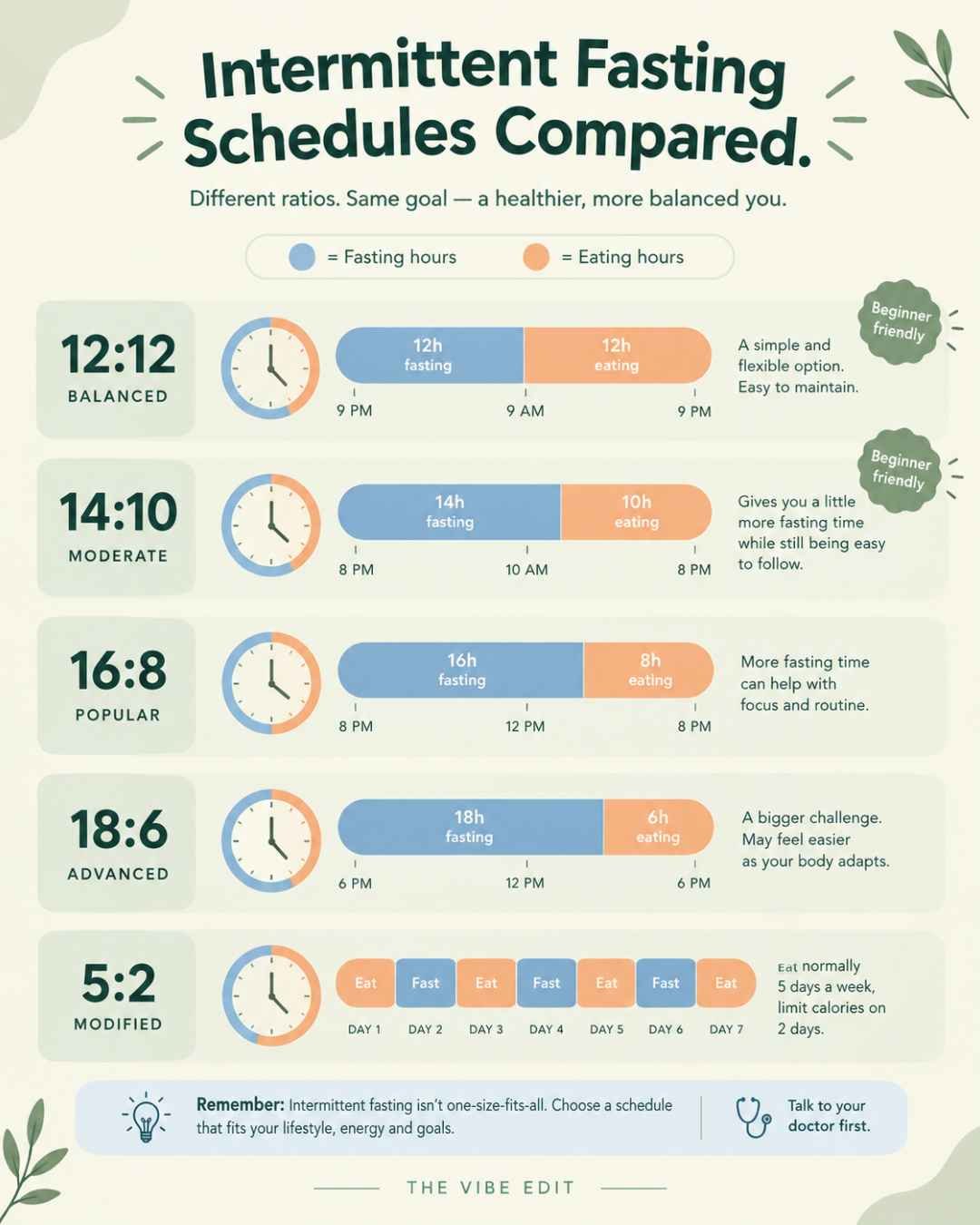
Here are the common options:
- 12:12: 12 hours of fasting and 12 hours of eating. This is the easiest place to begin.
- 14:10: 14 hours of fasting and 10 hours of eating. A gentle, popular starting point.
- 16:8: 16 hours of fasting and 8 hours of eating. This is the most searched option, and Cleveland Clinic describes it as a common time-restricted approach.
- 18:6: 18 hours of fasting and 6 hours of eating. This is more restrictive and harder to sustain.
- 5:2: Five regular eating days and two lower-calorie days each week. It works differently from daily time-restricted eating, and I would call it an advanced option.
16:8 Intermittent Fasting for Beginners
16:8 intermittent fasting is popular because it fits neatly around sleep. If you stop eating at 8 PM, you break the fast at noon. Many people simply skip an early breakfast.
It is not required, though. A shorter window can be a much more comfortable starting point.
A Simple Example Day
Here is a sample 14:10 day:
- 7 PM: Finish dinner.
- 7 PM to 9 AM: Fast. Water and plain tea are fine.
- 9 AM: Break your fast with a protein-rich breakfast.
- 1 PM: Eat a balanced lunch.
- 6 PM: Have a lighter dinner, then close the kitchen at 7 PM.
After two weeks, you can push breakfast to 10 AM if it feels easy.
What Can You Drink While Intermittent Fasting?
This is the question I get most. The good news is that you can drink plenty during the fasting window, as long as the drink has no calories.
According to Johns Hopkins, water and zero-calorie drinks like black coffee and tea are fine during a fast. Here is how I think about it.
Calorie-Free Beverages That Work
- Water: Still or sparkling, with no sweeteners.
- Black coffee: Skip the milk, cream and sugar.
- Plain tea: Green, black or herbal tea with nothing added.
Drinks That Break Your Fast
- Sugary drinks such as soda and juice
- Coffee with creamer or flavored syrups
- Milk lattes and smoothies
A splash of milk in your coffee may seem harmless. It adds calories, which technically ends the fast, so decide what matters to you and stay consistent.
By the way, I find a warm cup of herbal tea makes a slow Sunday morning feel calm, which fits right into a self-care Sunday routine.
What to Eat During Intermittent Fasting (Vegetarian Edition)
Our family is vegetarian and we do not eat eggs, so I had to figure out what to eat during intermittent fasting without the usual egg-and-chicken advice. It is easier than it sounds.
The biggest trap is thinking, “I fasted, so I can eat anything.” Johns Hopkins specifically warns against packing the eating window with very high-calorie foods. Food quality still matters.
Build Balanced Meals
Aim for these building blocks at most meals:
- Protein: Lentils, chickpeas, paneer, tofu, Greek yogurt, edamame and tempeh.
- Fiber: Vegetables, beans, oats, berries and chia seeds.
- Whole grains: Brown rice, quinoa, millet and whole wheat roti.
- Healthy fats: Nuts, seeds, avocado and olive oil.
These whole foods keep you full and steady, which makes the next fast much easier.
A Sample Vegetarian Eating Window
Breakfast (9 AM)
Greek yogurt with berries, chia seeds and a handful of almonds. It is quick and gives you protein right away.
Lunch (1 PM)
A bowl of quinoa, roasted chickpeas, cucumber, spinach and a lemon-tahini dressing.
Dinner (6 PM)
Dal with brown rice and sautéed vegetables, or a paneer and vegetable stir-fry.
If you work from home like I do, set up a comfortable space so you are not eating at your keyboard. My standing desk cable management guide helped me clear the clutter so lunch felt like an actual break.
Can Intermittent Fasting Help With Weight Loss?
It may help some adults, but it is not a magic switch. Eating in a shorter window can naturally reduce your calorie intake, and that can support weight management.
NIH-supported research has found that time-restricted eating can be an effective weight loss option for some adults. On the other hand, Harvard Health has pointed out that the effect may be smaller than the early hype suggested.
Here is what the evidence supports:
- It may help some people manage weight.
- It is not automatically better than other healthy eating patterns.
- Long-term results are still being studied.
My honest takeaway is that the best plan is the one you can keep doing. If a fasting schedule makes you obsessive or miserable, it is the wrong one.
Common Mistakes When You Learn How to Intermittent Fast
I made most of these, so learn from me.
Starting With an Overly Long Fast
Jumping to 18 hours on day one usually ends in a snack binge by evening. Build up slowly.
Not Drinking Enough Water
Mild dehydration can feel like headaches and tiredness. Keep hydration simple and constant.
Overeating in the Eating Window
Eating enormous meals to “make up” for the fast cancels the point. Eat normally.
Ignoring Symptoms
Dizziness, fainting, a racing heart or intense weakness are signals to stop. Side effects such as hunger, headaches and irritability are common at first, but severe symptoms are not normal.
Trying to Be Perfect
You will have a birthday dinner or a late flight. Just return to your routine the next day.
Is Intermittent Fasting Safe for Everyone?
No. This is the part of the topic I take most seriously, because of what I have seen at home.
Who Should Talk to a Doctor First
Mayo Clinic and Johns Hopkins both list groups who should be careful or avoid fasting. Please talk to a medical professional before you begin if you:
- Are pregnant or breastfeeding
- Are under 18
- Have a history of an eating disorder
- Take regular medication or manage a chronic condition
Medical Conditions and Medication
Some conditions and medications change how your body handles food and fluids. A fasting plan that works for a friend can be risky for you.
Diabetes and Fasting
My grandfather’s notebook has a rule underlined twice: never change meal timing without asking his doctor. People who take insulin or certain diabetes medications can develop dangerously low blood sugar when they skip meals.
Why Timing Matters
Medication is designed to work alongside food. If the food is missing, the dose can be too strong. Please do not treat intermittent fasting as a home remedy for diabetes. Get personal advice from a doctor or registered dietitian.
Frequently Asked Questions
How Should a Beginner Start Intermittent Fasting?
Start with a manageable schedule like 12:12 or 14:10 before considering a longer fasting period. Pick a routine that fits your normal sleep and meal times.
Is 16:8 Intermittent Fasting Good for Beginners?
It is a common time-restricted schedule, but nobody has to start there. A shorter fasting window can be a more comfortable first step.
Can I Drink Coffee While Fasting?
Plain black coffee is commonly used during a fast. Skip the milk, cream and sugar if you want it to stay calorie-free.
Can Intermittent Fasting Help You Lose Weight?
It may help some people manage weight, especially when the schedule lowers overall calorie intake. It is not automatically better than other healthy eating patterns.
Who Should Avoid Intermittent Fasting?
People who are pregnant or breastfeeding, under 18, have a history of eating disorders, or have certain medical conditions should talk with a healthcare professional first.
Two Quick Tips
Quick Tip 1: Do not treat your eating window as an unlimited buffet. Prioritize balanced meals with protein, fiber, vegetables and whole foods.
Quick Tip 2: Pick a schedule you can actually maintain. Consistency is more useful than forcing a very long fast that does not fit your life.
Final Takeaway
Learning how to intermittent fast does not need to be complicated. Start manageable, choose a consistent window, eat nourishing meals, drink plenty of water and watch how you feel.
If you want more calm, practical routines, explore more from The Vibe Edit. You might also like the Dr. Gina Sam 7-second morning ritual as a gentle way to start your day.
Quick poll for you: Which schedule will you try first, 12:12, 14:10 or 16:8? Tell me in the comments, and share your biggest struggle so I can cover it next.